.jpg)
The Importance of a Comprehensive Water Damage Inspection
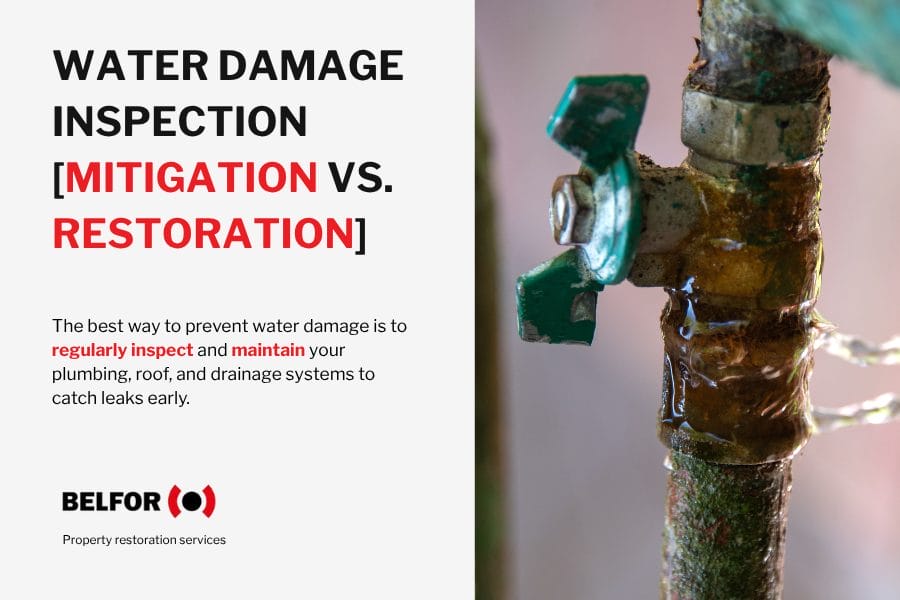
Did you know that water damage accounts for nearly 30% of all home insurance claims in the U.S.?
In many cases, that water damage comes from burst pipes, a leaking roof, or flooding after a storm.
Ignoring the first signs can allow mold to grow within 24 to 48 hours, and structural deterioration can weaken your property over time.
Today, we’ll cover everything you need to know about inspections, when you should seek professional services and why knowing what to do in this situation makes all the difference.
Why Does Water Damage Inspection Matter?
Water damage isn’t always visible or obvious to the untrained eye. Sometimes it can be quietly seeping into walls, floors, and ceilings, leading to costly repairs if not addressed quickly.
Why does it matter? Without a proper inspection, hidden water intrusion can cause mold damage, structural deterioration, and even electrical hazards, putting your property and safety at risk.
According to industry studies, 90% of homes experience some level of water damage over their lifetime, making proactive inspections essential for both homeowners and businesses.
Professional water damage inspections help pinpoint problem areas before they escalate.
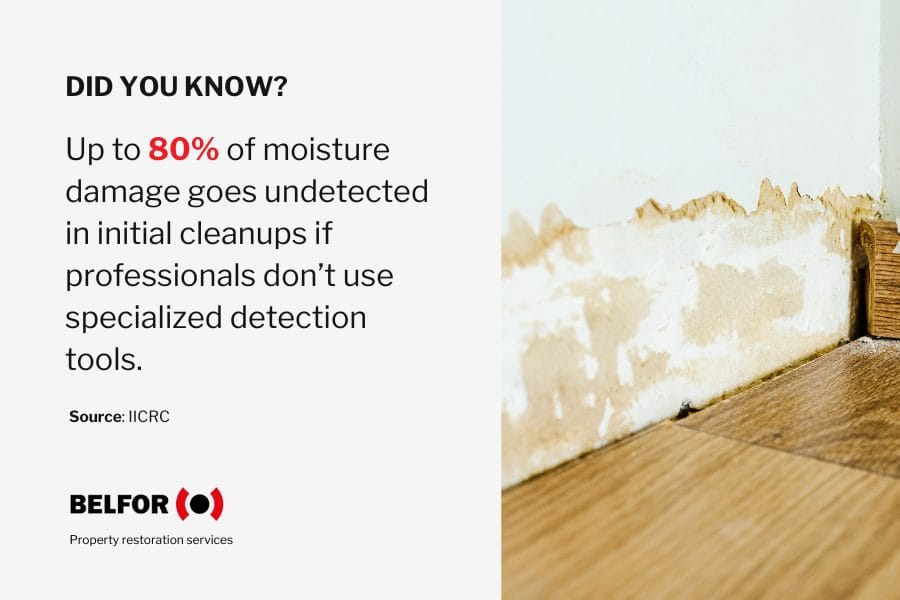
Key Components of a Professional Water Damage Inspection
A comprehensive water damage inspection goes beyond surface-level checks to identify hidden moisture, assess structural integrity, and prevent long-term damage.
1. Visual Assessment: Identifying Surface-Level Damage
The first step in any inspection is a detailed visual assessment of the affected areas.
Inspectors look for stains, warping, bubbling paint, and discoloration on walls, ceilings, and floors – common signs of water damage.
They also check for musty odors, which may indicate hidden moisture problems or mold growth.
- Category 1 (clean water from supply lines)
- Category 2 (moderately contaminated water, like dishwasher leaks)
- Category 3 (highly contaminated water like sewage or flood runoff)
Pro tip: Even minor water stains could signal a larger problem behind the surface. If you spot any discoloration or peeling paint, a professional inspection is highly recommended.
2. Moisture Detection Tools: Finding Hidden Water Intrusion
Not all water damage is visible to the naked eye. Professionals use advanced moisture detection equipment to locate hidden water pockets behind walls, under flooring, and within insulation.
Key tools include:
- Moisture meters to measure the level of dampness in materials
- Infrared cameras to detect temperature variations that indicate moisture buildup
- Hygrometers to assess humidity levels in the air, which can help determine potential mold risks
Pro tip: Water can travel further than you think. A small leak in one area may affect rooms several feet away, making professional moisture mapping crucial.
3. Structural Evaluation: Integrity of Walls, Ceilings, and Floors
Water damage weakens building materials over time, potentially compromising structural integrity.
Inspectors examine:
- Water damage in walls and ceilings for swelling, soft spots, or sagging
- Flooring for warping, loose tiles, or buckling wood
- Foundations for cracks that may allow further water intrusion
Pro tip: Warped or sagging ceilings are red flags, water accumulation above could lead to collapse. Immediate professional intervention is necessary.
4. Mold and Air Quality Testing: Contamination Concerns
Where there is excess moisture, microbial growth often follows. Mold can begin developing within 24 to 48 hours after water exposure, making early identification and response important.
A water restoration professional can perform visual inspection to identify potential signs of mold or microbial growth. If mold is suspected, especially in more extensive cases a third-party Indoor Environmental Professional (IEP) may be engaged to conduct further evaluation.
To better understand the extent of contamination, an IEP may perform:
- Surface sampling on affected materials
- Air quality testing to assess airborne mold spores
- Humidity and environmental assessments to evaluate conditions that support mold growth
When mold or other environmental hazards (such as asbestos) are suspected, restoration professionals work alongside qualified IEPs to ensure proper testing, analysis, and documentation.
Pro tip: Musty odors or persistent allergy symptoms may indicate mold, even if no visible signs are present. A professional evaluation can help determine whether further testing is needed.
Water Damage Mitigation vs. Restoration: What’s the Difference?
When your home or business is affected by water, the response happens in phases – starting with mitigation, which takes place first and sets the stage for full restoration.
Mitigation: The immediate, short-term actions taken to limit the scope of damage and prevent it from spreading further.
This phase includes:
- Extracting standing water
- Setting up containment for Category 3 losses
- Blocking furniture to prevent absorption from wet floors
- Removing or protecting contents at risk
- Performing a pre-restoration inspection to assess severity and safety
Restoration: The follow-up process to bring the property back to its pre-loss condition.
This phase involves:
- Additional rounds of extraction if needed
- Precise structural drying based on science (airflow, temperature, humidity)
- Daily moisture level tracking and adjustments
- Cleaning, repairs, and returning furniture and contents
Pro tip: Mitigation limits damage. Restoration repairs it. Skipping or delaying mitigation makes restoration longer and more expensive.
The Difference Between Inspection, Assessment, and Estimates
Water damage recovery isn’t a one-step process, it involves inspection, assessment, and estimates, each serving a distinct purpose.
Safety Inspection: The Critical First Step in Water Damage Recovery
Safety comes first. Before any cleanup begins, professionals must assess and neutralize risks to people and property.
This includes:
- Identifying electrical hazards from exposed wires or wet circuits
- Checking for compromised structural elements (sagging ceilings, weakened floors)
- Flagging contamination risks from Category 2 or 3 water sources
These evaluations ensure the site is safe for mitigation and restoration teams to work, and for occupants to return when cleared.
Pro Tip: Never enter a water-damaged area until a certified technician has confirmed it’s structurally and electrically safe.
Water Damage Inspection: Mapping the Full Scope of the Loss
Once safety is secured, technicians move into a detailed water damage inspection to document every affected area and plan for recovery.
This step includes:
- Locating both visible and hidden water damage
- Using moisture meters, infrared cameras, and hygrometers to detect moisture
- Creating a comprehensive damage report to guide drying and restoration
Pro tip: A professional water damage inspection ensures no hidden moisture is left behind – preventing mold, structural rot, and recurring issues later.
Water Damage Assessment: Determining the Severity of the Issue
Once an inspection identifies affected areas, a water damage assessment determines how severe the damage is and what actions are needed for recovery.
This includes:
- Categorizing water damage (category 1, category 2, or category 3)
- Assessing how deeply moisture has penetrated materials
- Evaluating structural integrity
- Assessing the potential for mold growth
A proper assessment guides restoration efforts, helping professionals determine if materials can be dried and salvaged or if replacements are necessary.
Pro tip: Not all water damage is the same – Category 3 contamination (like sewage backups) requires specialized biohazard remediation.
Water Damage Estimate: The Cost of Repairs and Restoration
After an inspection and assessment, professionals may provide an estimate for necessary repairs. For mitigation services such as water extraction, drying, and cleanup, a Rough Order of Magnitude (ROM) may be provided in some cases, particularly for commercial projects, to help outline the expected scope and potential costs.
Estimates typically factor in:
- Labor costs for cleanup and restoration
- Materials needed for repairs (drywall, flooring, etc.)
- Specialized treatments such as mold remediation or odor removal
- Equipment use like industrial dehumidifiers or air scrubbers
Pro tip: Always request a detailed, itemized estimate to avoid unexpected costs and ensure transparency in the restoration process.
When Should You Schedule a Water Damage Inspection?
Water damage can develop slowly over time or occur suddenly, but delaying an inspection can lead to severe structural issues and costly repairs.
Signs You Need a Water Damage Inspection Immediately
Certain warning signs indicate immediate action is necessary to prevent further damage.
If you notice any of the following, a professional inspection is critical:
- Standing water
- Water dripping from walls or ceiling
- Leaking pipes
- Discoloration on walls or ceilings (yellow, brown, or dark spots)
- Musty odors that indicate mold or mildew growth
- Peeling paint or wallpaper, which suggests trapped moisture
- Warped or buckling flooring (especially hardwood)
- Sudden spikes in your water bill, hinting at a hidden leak
Pro tip: The longer water damage goes undetected, the worse it gets. Even minor leaks can lead to mold within 24-48 hours.
Post-Storm and Flooding Inspections: What To Look For
After heavy rain, hurricanes, or flooding, water can seep into walls, basements, and crawl spaces without obvious signs.
A post-storm inspection can help detect:
- Foundation cracks or pooling water near the home
- Saturated insulation behind walls
- Electrical hazards from water exposure
- Mold growth from prolonged moisture exposure
Even if standing water has receded, moisture can remain trapped inside materials, leading to gradual deterioration. A professional moisture check ensures your home is truly dry and prevents long-term structural damage.
Pro tip: After a flood, don’t rely on visual checks, use moisture meters in conjunction with thermal imaging to detect hidden water.
Plumbing Failures and Hidden Leaks: When To Take Action
Leaking pipes and plumbing failures often go unnoticed until damage becomes visible, while other events are immediate and obvious.
If you suspect a hidden leak or experience a sudden plumbing issue, a water damage inspection can help determine how far water has spread and what areas may be affected beyond what’s visible.
Inspections are especially useful when dealing with:
- Slow drips behind walls that can lead to mold and material deterioration
- Pipe bursts that cause immediate damage but may also affect hidden structural areas
- Sewer backups that require professional cleanup and evaluation of contamination spread
Regular inspections of plumbing systems help prevent costly water damage before it spreads.
Pro tip: If you hear dripping sounds or notice unexpected moisture, turn off your main water supply and schedule an inspection immediately.
Trust BELFOR for Effective Water Damage Repair Services
At BELFOR, we understand water damage is more than just an inconvenience, it’s a serious threat to your home or business. Left unchecked, even minor leaks can weaken structures, promote mold growth, and lead to costly repairs.
When you choose BELFOR, you get more than just a cleanup crew, you get industry-leading expertise, advanced technology, and a team committed to restoring safety and peace of mind.
Here’s what you can expect when working with us:
- Comprehensive inspections: We use advanced moisture detection tools to identify hidden water damage before it spreads.
- 24/7 rapid response: Emergencies don’t wait, and neither do we. Our teams are available around the clock to minimize damage and prevent further issues.
- Expert restoration services: From structural drying to mold prevention, we handle every step of the restoration process.
- Seamless insurance assistance: We work directly with your insurance provider, helping you navigate claims and paperwork.
- Trusted industry leadership: With over 75 years of experience, BELFOR is the name property owners trust for disaster recovery and restoration.
Water damage doesn’t fix itself – take action today. Contact BELFOR for a professional water damage inspection and restoration plan. We’re here and ready to help.