.jpg)
Does Vinegar Kill Mold & Why Bleach Isn’t Better Either
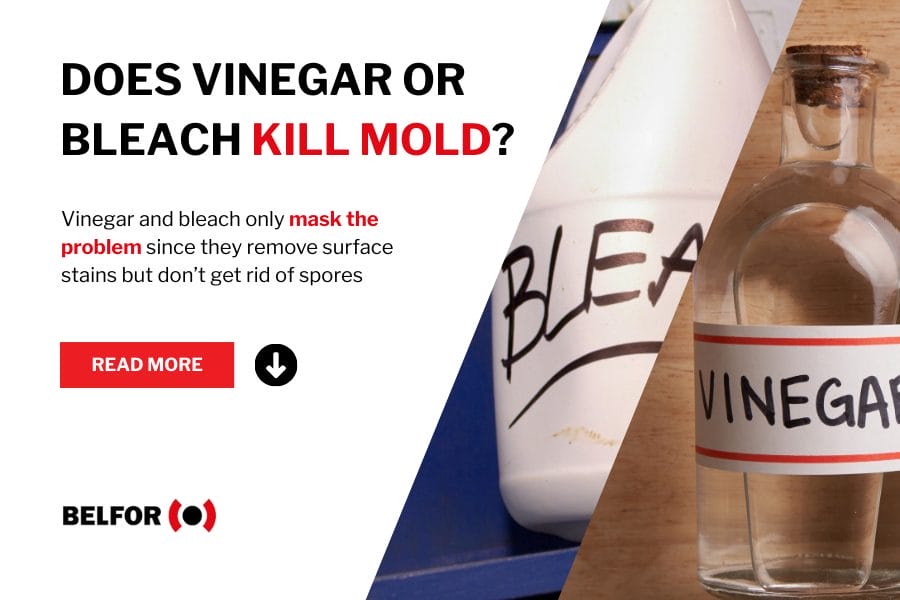
Does Vinegar or Bleach Kill Mold? Key Takeaways
- Vinegar offers limited effectiveness, and while it is slightly more effective than bleach on non-porous surfaces, neither stops mold from regrowing or spreading
- Bleach only masks the problem since it removes surface stains but does not kill spores beneath porous materials like drywall or wood
- DIY mold cleaning can make things worse because scrubbing or spraying mold can disturb colonies and release more spores into the air
- Mold and mold damage can often happen in hidden places such as behind walls, under flooring, or inside HVAC systems, areas DIY solutions can’t reach
- Professional mold remediation is the safest and most thorough option since it addresses the root cause and requires physical removal of mold damage
Mold can begin growing in as little as 24 to 48 hours, and once it spreads, it doesn’t stop without professional intervention.
When mold appears in your home or business, many people turn to common household solutions like bleach or vinegar, thinking they can eliminate the issue on their own.
But here’s the truth: neither vinegar nor bleach effectively removes mold at its roots or stops it from returning.
This blog will break down:
- Why vinegar and bleach fail to eliminate mold completely
- The dangers of using DIY cleaning methods on mold
- How mold spreads in hidden areas like walls and HVAC systems
- Why professional remediation is essential for long-term protection
Does Vinegar Kill Mold?
The short answer is no. While vinegar is often seen as a “natural” alternative for household cleaning, it’s not strong enough to fully eliminate mold.
Many homeowners turn to vinegar hoping for a safe and affordable solution, but when it comes to mold removal, the results fall short, and the risks can grow.
Without proper containment, personal protective equipment (PPE), and remediation tools, disturbed mold spores can easily become airborne, spreading to other rooms or embedding deeper into walls and HVAC systems.
Does Bleach Kill Mold? Why It Isn’t the Right Choice
Using bleach to tackle mold may seem like a quick fix, but it doesn’t solve the root of the problem. In fact, it can create a false sense of security while allowing hidden mold to grow unchecked.
1. Surface Cleaning vs. Spore Elimination
Bleach is effective at whitening and removing stains on non-porous surfaces like tile or glass.
However, mold thrives in porous materials like wood, drywall, insulation, and carpet, areas where bleach can’t reach.
It may kill mold on the surface, but it won’t touch the spores or root systems embedded deeper inside the material. That means the mold can return, often stronger than before.
Pro tip: Just because the stain is gone doesn’t mean the mold is. If porous materials are involved, professional remediation is your safest option.
2. Health Risks of Using Bleach Indoors
Bleach emits strong fumes that can irritate the eyes, skin, throat, and lungs, especially in enclosed spaces where ventilation is limited.
Using it improperly or without protective gear can worsen indoor air quality and trigger reactions in people with asthma or respiratory sensitivities.
Pro tip: The EPA does not recommend bleach for routine mold cleanup.
Safer and more effective alternatives exist when handled by trained remediation experts.
3. Bleach and Mold: A Temporary Illusion
Bleach may make mold look like it’s gone by removing the dark stain, but the fungal structure and spores often remain active beneath the surface.
Worse, the water content in bleach can seep into porous materials and feed mold growth. Over time, the mold returns, sometimes spreading more aggressively.
Pro tip: If you’ve “cleaned” with bleach and mold keeps coming back, you’re dealing with a deeper issue that bleach can’t fix.
The Limitations of White Vinegar for Mold
White vinegar may help clean some visible mold off of non-porous surfaces, but it doesn’t remove existing spores or root structures to prevent regrowth.
Mold spores settle and take root within porous materials like drywall, insulation, or flooring, areas that vinegar can’t penetrate.
The acidity of vinegar isn’t enough to destroy the mold root system or deactivate airborne spores.
Pro tip: Even if the surface looks cleaner, mold can still grow underneath, and come back fast without proper remediation.
Overnight Vinegar Treatments Don’t Eliminate Mold
Some DIY guides suggest spraying vinegar and leaving it overnight to “kill mold.”
While the surface may look improved, mold colonies embedded in structural materials, or in unreachable areas such as HVAC systems, remain unaffected.
Without professional containment, physical removal of mold-damaged materials, and spore removal, the underlying problem persists and may spread unnoticed.
Pro tip: Mold doesn’t just live on the surface. It thrives behind walls, under floors, and inside air ducts, where vinegar can’t reach.
DIY Treatments Can Make Mold Worse
Attempting to clean mold with vinegar (or bleach) can disturb the colony, causing it to release spores into the air.
These microscopic spores can spread throughout your home, creating new growth in other areas, and increasing the risk of respiratory problems for those nearby.
Pro tip: Disturbing mold without containment increases contamination. Professional teams use negative air pressure and HEPA filtration to stop mold from spreading.
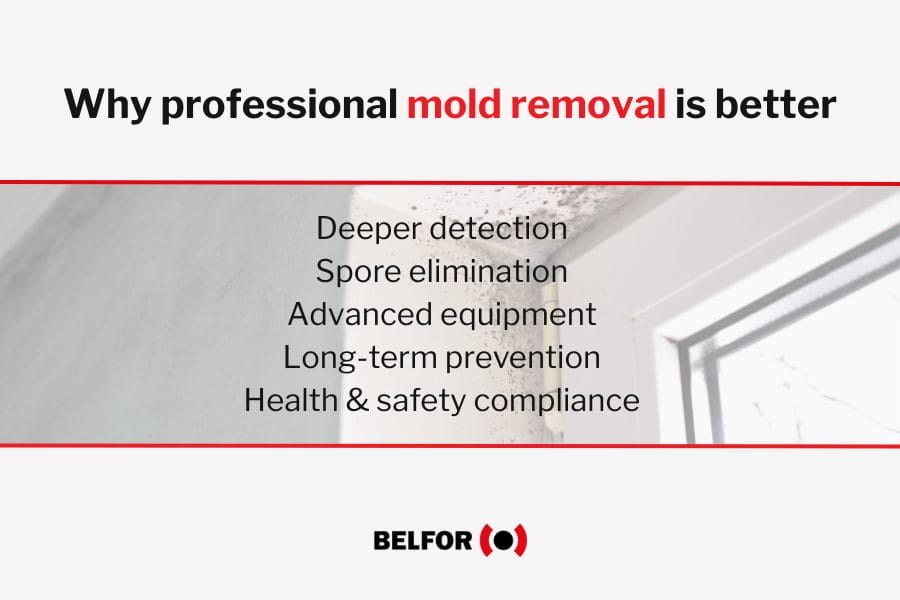
Why Professional Mold Remediation Is the Only Safe Solution
While vinegar and bleach might give the illusion of a quick fix, professional mold remediation is the only proven way to fully eliminate mold, protect your health, and restore your property.
1. Thorough Inspection and Containment Come First
Certified mold remediation specialists begin by assessing and identifying all affected areas, including mold hidden behind walls, under flooring, or in HVAC systems.
Mold remediation professionals may bring in a third-party indoor environmental professional or industrial hygienist to conduct air sampling and testing to confirm the full extent of the infestation.
2. Advanced Tools for Safe Mold Removal
Unlike DIY methods, remediation teams use HEPA vacuums, industrial-grade air scrubbers, and EPA-approved antimicrobial solutions to clean the affected areas.
Because proper mold remediation protocol requires physical removal of mold growth, selective demolition is used first to remove any mold-damaged materials.
Then, cleaning of the remaining surfaces and structure can take place.
Pro tip: Professionals isolate the area using negative air machines and containment barriers, stopping spores from spreading to other parts of your home.
3. Drying, Repairs, and Prevention Strategies
Mold remediation cannot begin until the source of the moisture issue is corrected.
Professional restoration teams are able to identify the source and correct any water damage issues that led to the mold growth.
Proper drying and prevention start with controlling the indoor environment to restore and maintain proper temperature, relative humidity, and airflow.
Pro tip: Remediation isn’t just about cleanup, it’s about restoring your home to a safe, healthy condition and reducing the risk of future damage.
Can I Use Vinegar for Mold? Key Points
- Bleach and vinegar aren’t enough: These household cleaners don’t provide the deep decontamination needed to truly eliminate mold.
- DIY mold removal poses health risks: Handling mold without proper containment and gear can expose you to toxic spores.
- Hidden mold needs expert detection: If you can see mold, there’s a good chance more exists out of sight and only pros can find it.
- BELFOR offers trusted remediation solutions: From containment to full restoration, we help you reclaim your space quickly and safely.
Trust BELFOR for Safe and Effective Mold Remediation
At BELFOR, we don’t just remove mold, we restore safety, health, and peace of mind. With over 75 years of experience in property restoration, we know how to handle even the most complex mold problems with speed, precision, and compassion.
When you choose BELFOR for mold remediation, you can count on:
- Certified mold experts: Our technicians are trained according to the industry’s latest mold remediation standards (issued by the IICRC) and equipped with the tools to fully address mold and moisture problems.
- Advanced containment and removal: We use industry-leading containment protocols, HEPA filtration, and antimicrobial treatments to stop mold from spreading and inhibit future growth.
- Full-service restoration: From moisture detection and structural drying to drywall repair and air quality testing, we don’t stop until your property is fully restored.
- Health-first approach: Your safety is our top priority. We follow strict guidelines to correct airborne spore count levels (which affect indoor air quality), eliminate hidden contamination, and take all necessary precautions to properly handle the infestation to help address potential health risks.
- Support with insurance claims: We help document the damage and communicate directly with your insurer to simplify the claims process.
Don’t rely on vinegar or bleach to fight a deeper problem. If mold is affecting your home or business, call the experts who know how to take care of it, safely, thoroughly, and completely.

![Mold In Air Vents & Ducts [Causes & 2026 Cleaning Guide]](https://www.belfor.com/us/wp-content/uploads/sites/2/2025/10/mold_in_air_vents_and_ducts_hero_image-450x300.jpg)