Factory and Building Restoration for Faster Business Recovery
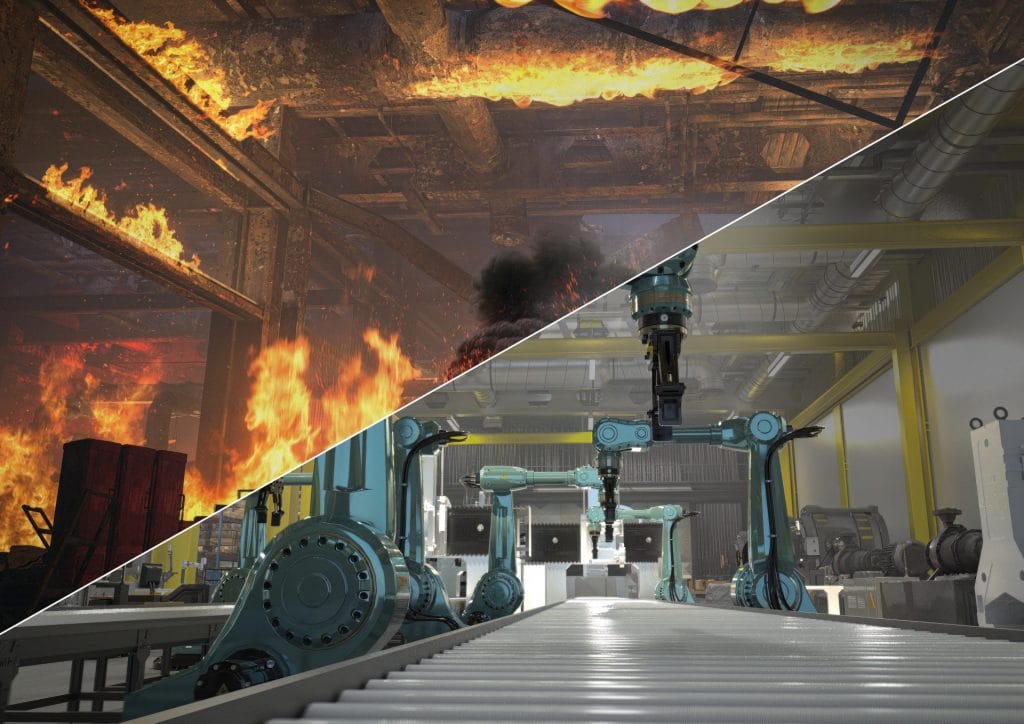
When a disaster such as a fire, flood, or industrial accident occurs, one of the most significant impacts on a business is production downtime (Business Interruption), which affects revenue, customer confidence, and operating costs that continue to increase with each passing day.
Many organizations believe that demolition and reconstruction are the fastest solutions. In reality, however, technical restoration approaches are now available that can reduce downtime and help businesses resume operations much faster than rebuilding.
A systematic approach to building repair and asset restoration is therefore essential to business recovery after a disaster.
Four Urgent Steps for Factory Recovery After a Disaster
1. Emergency Stabilization
The first step is to prevent the damage from escalating further, such as:
- Water extraction from affected areas
- Moisture control
- Corrosion prevention for machinery
- Installation of temporary structural supports
A rapid response helps reduce repair costs and increases the chances of recovering critical equipment.
2. Structural and Engineering Assessment
Before any structural repair work begins, it is necessary to conduct a thorough inspection of the building’s safety and its various systems.
Specialists assess the primary structure, electrical systems, machinery, and production areas in order to develop the most appropriate and safest restoration plan.
3. Technical Cleaning
After a fire or flood, much of the damage is caused by residual soot, moisture, and contaminants.
Technical cleaning therefore includes the restoration of machinery, circuit boards, and industrial systems using specialized techniques to help reduce corrosion and extend the service life of equipment.
4. Testing and Commissioning
Before operations can resume, all systems must be tested to ensure that the building and machinery can operate safely and efficiently.
This step helps reduce the risk of recurring issues and enables businesses to resume operations with greater confidence.
Why Structural Restoration Must Balance Safety and Speed
While many businesses aim to reopen their facilities as quickly as possible, rushing repairs without conducting a detailed assessment may lead to greater damage in the long term.
Examples of damage that is often not visible include:
- Heat exposure that causes reinforcing steel to lose strength
- Moisture accumulation within walls and foundations
- Internal cracking in concrete
Therefore, building structural restoration that meets appropriate standards must consider both safety and minimizing the impact on areas that can still be used, allowing parts of the production line to continue operating during the restoration process.
Advanced Technologies for Recovering Machinery and Electronic Equipment
Today, comprehensive damage restoration technologies enable many businesses to recover machinery without the need for complete replacement.
Examples of commonly used techniques include:
- Ultrasonic Cleaning for the detailed cleaning of electronic components
- Specialized techniques for removing corrosion and contaminants
- Drying and moisture control systems for electrical equipment
The advantage is that these methods can reduce costs by more than 50% compared with purchasing new equipment, while also reducing lead times that may affect production capacity.
Having a clear Recovery Plan and working with a property restoration company with international experience can help make building restoration, factory repair, and machinery recovery more efficient.
If you require comprehensive property restoration services, contact BELFOR Thailand for consultation and support throughout every stage of the recovery process, from damage assessment through to the handover of the facility ready for operation once again.


