Why Smoke Damage Can Be More Destructive Than Fire: The Hidden Risks You Shouldn’t Ignore
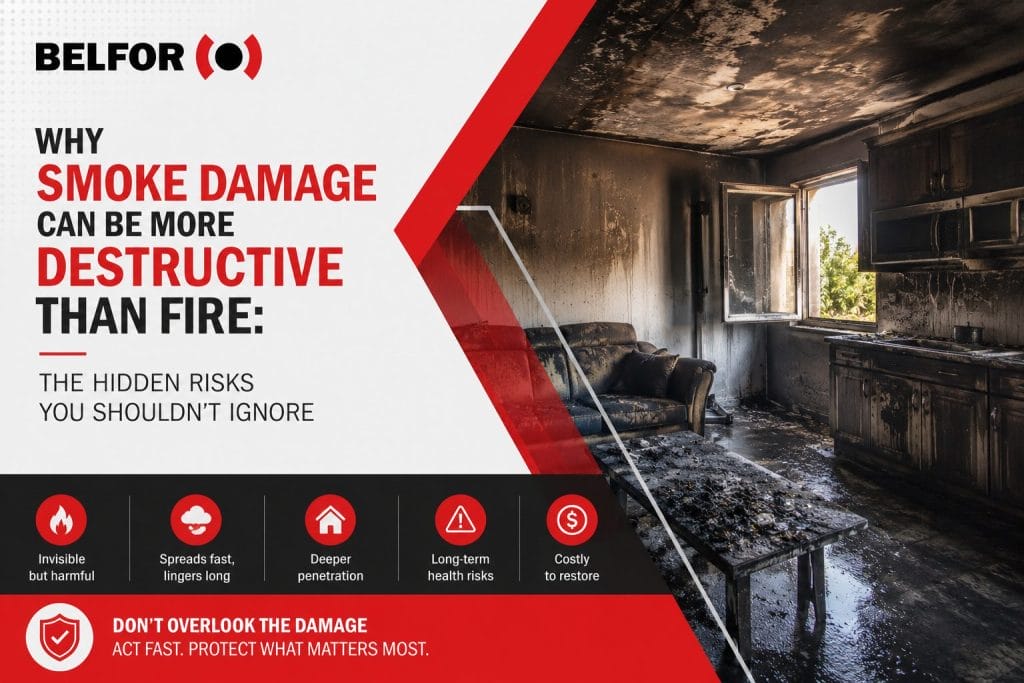
When people think about fire damage, they often picture burned walls, collapsed roofs, or destroyed furniture. However, restoration professionals know that the flames are not always the greatest threat.
In many cases, smoke and soot continue damaging a property long after the fire has been extinguished. These invisible contaminants can spread throughout an entire building, affecting areas that were never touched by flames.
Whether it is a home, office, hotel, hospital, manufacturing facility, or data center, smoke damage can lead to expensive repairs, equipment failures, persistent odors, and prolonged business interruption if not addressed quickly.
Understanding how smoke affects a property is the first step toward reducing long-term damage and improving the chances of successful restoration.
Smoke Doesn’t Stay Where the Fire Started
One of the biggest misconceptions about fire damage is that it is limited to the room where the fire occurred. In reality, smoke moves rapidly through a building.
As hot air rises, smoke travels through hallways, stairwells, ceiling voids, ventilation systems, cable penetrations, and even small gaps around doors and windows. As a result, rooms located far from the fire may still suffer significant smoke contamination despite showing no visible signs of fire damage. This is why professional damage assessments often identify affected areas well beyond the original fire zone.
More Than Just Black Dust
Many people think soot is simply black powder left behind after a fire. In reality, soot is a complex mixture of microscopic particles and combustion by-products produced when materials burn.
Depending on what was involved in the fire—such as plastics, electronics, insulation, furniture, textiles, or chemicals—smoke residues may contain substances capable of damaging a wide range of materials. Because these particles are extremely small, they can settle on nearly every surface inside a building, including areas that are difficult to see or reach.
1. Smoke Can Damage Electronics Without Burning Them
One of the most costly consequences of smoke damage involves electrical and electronic equipment. Computers, servers, industrial control systems, production machinery, medical equipment, and communication devices may appear completely undamaged after a fire. However, microscopic soot particles can settle inside these systems.
Over time, these contaminants may:
- Interfere with electrical contacts
- Reduce equipment reliability
- Increase the risk of corrosion
- Cause overheating
- Lead to unexpected equipment failure
This is particularly critical for businesses where even a single equipment failure can interrupt operations or result in data loss.
2. Corrosion Begins Sooner Than Most People Expect
One of the lesser-known effects of smoke damage is corrosion. Certain types of smoke residues become increasingly aggressive when combined with moisture in the air or residual humidity left behind after firefighting.
This reaction may begin affecting:
- Metal components
- Machinery
- Electrical panels
- Circuit boards
- Stainless steel surfaces
- Precision instruments
The longer these contaminants remain untreated, the greater the likelihood that equipment that could have been restored will instead require replacement.
Did You Know?
In many fire incidents, the cost of smoke contamination exceeds the cost of repairing areas directly damaged by flames, particularly in commercial and industrial environments where sensitive equipment is involved.
Why Smoke Odors Are So Difficult to Remove
One of the most common questions after a fire is:
“Why does my property still smell like smoke even after I’ve cleaned everything?”
The answer lies in how smoke behaves. Smoke particles are incredibly small and can penetrate deep into porous materials such as:
- Wood
- Drywall
- Insulation
- Upholstery
- Carpets
- Curtains
- Ceiling tiles
Simply wiping visible soot from surfaces or opening the windows may remove the obvious signs of damage, but microscopic smoke particles often remain trapped inside building materials.
As these particles continue to release odor-causing compounds over time, the smell can return days or even weeks later. Professional smoke odor removal focuses not only on cleaning visible contamination but also on treating the hidden sources of odor within the property.
The Hidden Impact on Indoor Air Quality
Smoke contamination is not only a property issue, it can also affect indoor environmental quality. Fine smoke particles may remain suspended in the air or settle inside HVAC systems, where they can continue circulating throughout the building.
Without proper cleaning, occupants may experience:
- Persistent smoke odors
- Dust contamination
- Reduced indoor air quality
- Irritation of the eyes, nose, and throat
- Discomfort for building occupants
For businesses such as hotels, hospitals, offices, and commercial buildings, restoring indoor air quality is often just as important as repairing physical damage.
Smoke Damage Can Affect Businesses Long After the Fire
For businesses, the financial impact of smoke damage often extends far beyond repairing the building itself. Even if only one section of a facility catches fire, smoke contamination may spread into production areas, offices, warehouses, server rooms, or clean environments.
This can result in:
- Operational downtime
- Production delays
- Inventory contamination
- Equipment failures
- Project interruptions
- Lost revenue
- Customer dissatisfaction
In many situations, business interruption becomes one of the most significant costs following a fire. Reducing downtime is therefore just as important as restoring the physical property.
Why DIY Smoke Cleanup Can Make Things Worse
After a small fire, many property owners try to clean smoke damage themselves. While this may seem like a cost-effective solution, improper cleaning techniques can actually increase restoration costs.
Common mistakes include:
- Wiping soot with water before identifying the type of residue
- Using household cleaning products on delicate surfaces
- Vacuuming soot without HEPA filtration
- Turning on HVAC systems before cleaning the ductwork
- Operating smoke-contaminated electrical equipment without inspection
These actions may spread contamination, embed soot deeper into surfaces, or even cause permanent damage to materials and equipment.
Can Smoke-Damaged Property Be Restored?
Fortunately, not everything affected by smoke needs to be replaced. With prompt assessment and the appropriate restoration techniques, many items can often be successfully recovered, including:
- Furniture
- Documents
- Electronics
- Machinery
- Building materials
- Commercial equipment
- Valuable personal belongings
The likelihood of successful restoration depends on several factors, including:
- The type of fire
- The materials involved
- The severity of contamination
- How quickly restoration begins
Early intervention can significantly improve restoration outcomes while reducing replacement costs.
Quick Checklist: What to Do After Smoke Damage
✔ Do not assume the damage is limited to the burned area.
✔ Avoid using smoke-contaminated electrical equipment.
✔ Do not attempt to remove soot with household cleaning products.
✔ Contact your insurance company as soon as possible.
✔ Arrange for a professional damage assessment.
✔ Begin restoration promptly to minimize secondary damage.
Conclusion
Fire damage does not end when the flames are extinguished. Smoke and soot can continue affecting your property long after the visible fire has been put out, leading to corrosion, equipment failure, persistent odors, reduced indoor air quality, and costly business interruption.
The good news is that early action makes a significant difference. Prompt assessment and professional restoration can help preserve valuable assets, reduce long-term damage, and shorten the path to recovery. Whether you are recovering from a residential fire or managing the restoration of a commercial or industrial property, understanding the hidden effects of smoke damage is an essential part of protecting what matters most.
BELFOR Helps You Recover Beyond Visible Damage
At BELFOR Thailand, we understand that smoke damage is often more complex than it appears.
Our specialists use advanced restoration techniques to assess contamination, remove smoke residues, eliminate persistent odors, restore machinery and electronics, and help properties return to safe operation as quickly as possible. Whether your property is a home, office, hotel, hospital, warehouse, or manufacturing facility, BELFOR is ready to support your recovery with professional fire and smoke damage restoration services.


