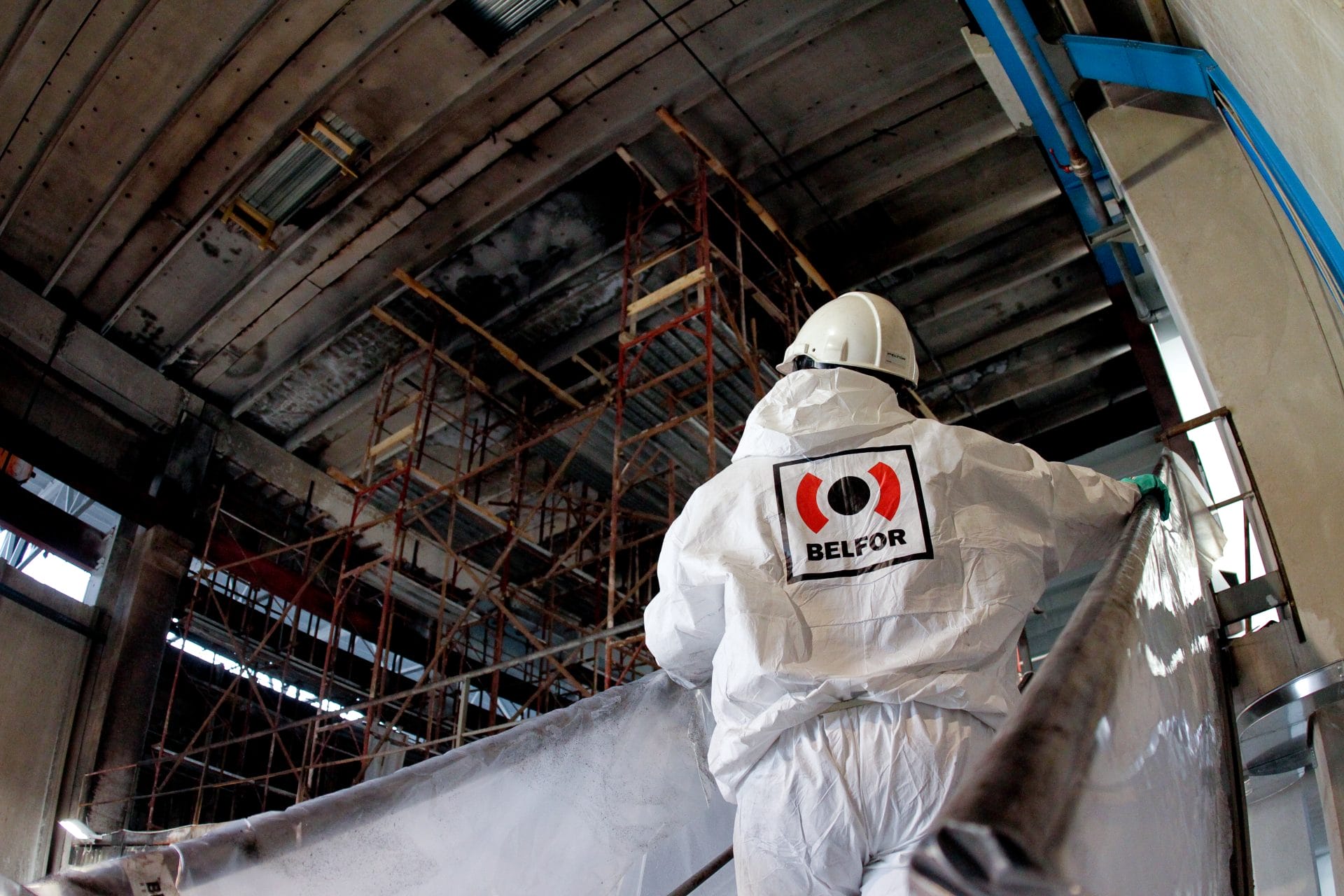
Industrial Dust Decontamination in Korea
Dust contamination can affect production quality, sensitive environments and operational reliability. BELFOR provides industrial dust decontamination for facilities affected by construction dust, manufacturing residues and environmental exposure. Our approach targets deposited dust on facility surfaces and within relevant building systems, with cleaning methods selected for the contamination and site conditions.
Whether you are dealing with dust following renovation works or a build-up of industrial particles, our team can assess the affected areas and develop a suitable decontamination scope. In facilities handling combustible powders, accumulated dust can also contribute to fire and explosion risks.
What Is Dust Contamination?
Dust contamination is the accumulation of fine particles, including dirt, fibres and industrial residues, on surfaces or within facility systems. It can occur during normal operations, without a fire, flood or other disaster. Airborne particles may settle on ceilings, ventilation systems, work areas and exposed assets, creating contamination risks that routine housekeeping may not adequately address.
Why Industrial Dust Removal Matters
The effects of dust depend on its composition, quantity and location. In industrial and controlled environments, dust can:
- Compromise product quality by introducing particles into production, packaging or testing areas.
- Restrict airflow in ventilation systems and around equipment, reducing cooling efficiency.
- Increase corrosion risks when moisture-absorbing particles collect on metal surfaces.
- Create fire or explosion hazards where combustible dust accumulates and conditions allow ignition.
- Interfere with sensitive electronics when conductive particles reach vulnerable components.
Dust mixed with oil can adhere more strongly to surfaces and be harder to remove. Understanding the contaminant is essential when selecting an appropriate cleaning method.
Combustible Dust: Fire and Explosion Risks
In certain industries, fine combustible dust can fuel a flash fire or explosion. Examples include flour, sugar and starch dust in food processing; some powders in pharmaceutical and chemical production; wood dust in furniture manufacturing; and certain metal, plastic or rubber dusts in processing and recycling operations.
A dust explosion can occur when combustible particles are dispersed in air at a sufficient concentration, encounter an ignition source and are confined. Dust left on floors, ledges, overhead surfaces or inside systems can become airborne when disturbed. An initial incident may disperse these deposits and trigger further explosions.
Appropriate removal of accumulated combustible dust is an important part of controlling this risk. Cleaning must be planned for the specific dust hazard, using suitable methods and equipment alongside dust capture, ignition control and other site safety measures. HEPA filtration alone does not make a vacuum suitable for combustible dust.
BELFOR’s service scope and equipment suitability should be assessed for each site. Dust removal supports a wider combustible dust safety programme; it does not replace a specialist hazard assessment or the facility’s explosion protection measures.
Dust Decontamination for Facilities and Sensitive Environments
BELFOR’s professional dust removal services are tailored to the affected environment. Depending on the site assessment, the scope may include:
- Removal of loose dust from accessible facility surfaces and hard-to-reach areas.
- Industrial ceiling cleaning and decontamination of overhead surfaces.
- Industrial duct cleaning for affected HVAC systems.
- Targeted dust removal around production areas and sensitive assets.
Where contamination extends inside machinery or electronic equipment, a separate asset-specific assessment may be needed. Visit our Equipment & Machinery Cleaning and Restoration page to explore this service.
Industries We Support
BELFOR supports clients across a wide range of sectors where cleanliness and system reliability are essential. Our industrial dust decontamination services are commonly used in:
Electronics manufacturing
In electronics manufacturing, even trace levels of dust contamination can cause defects in sensitive components such as circuit boards and microchips. Conductive particles increase the risk of short circuits, while insulating dust disrupts thermal regulation, leading to overheating and reduced product reliability.
Pharmaceutical production
Pharmaceutical facilities must meet strict regulatory standards for sterility and cleanliness. Industrial dust contamination in production areas can compromise product integrity, contaminate raw materials, and interfere with precision equipment. Maintaining a controlled environment is essential to protect both patient safety and compliance.
Data centres
In data centres, airborne dust settles on servers, wiring, and ventilation systems, restricting airflow and raising the risk of overheating. Conductive particles can cause intermittent failures or system outages. Regular industrial duct cleaning services and preventive measures are critical to ensure uptime and equipment reliability.
Food and beverage facilities
For food and beverage operations, dust contamination is both a hygiene and safety risk. Dust can settle on production lines, packaging areas, and ventilation systems, increasing the chance of cross-contamination and non-compliance with food safety regulations. Effective control measures are vital to maintain sanitary standards.
Aerospace and defence
In aerospace and defence environments, dust particles can interfere with precision instruments, coatings, and sensitive avionics. Industrial dust contamination affects the performance and longevity of high-value assets, with even minor buildup potentially leading to safety or reliability concerns in critical operations.
Automotive assembly
Automotive assembly plants generate significant airborne residues from welding, painting, and machining processes. Dust accumulation on robotic equipment or sensors can lead to production defects, reduced accuracy, and downtime. Proactive professional dust removal safeguards the efficiency and consistency of automated systems.
Cleanrooms and laboratories
Cleanrooms and laboratories rely on stringent cleanliness standards to protect experiments, research, and specialised production. Even minor dust contamination can compromise test results or disrupt sensitive chemical and biological processes. Continuous monitoring and strict decontamination protocols are required to maintain operational integrity.
Power plants and utilities
In power plants, industrial dust contamination collects on turbines, control panels, and ventilation systems, impairing cooling efficiency and increasing the risk of electrical faults. Conductive dust is particularly hazardous, as it can lead to short circuits and costly unplanned outages if not addressed promptly.
Marine and Offshore platforms
Marine and offshore facilities face unique challenges as airborne particles combine with salt and oil residues. This accelerates corrosion, reduces cooling efficiency, and creates fire hazards. Regular industrial ceiling cleaning and targeted decontamination are essential to maintain safety and extend equipment lifespan in these environments.
BELFOR’s Professional Decontamination Process
Our structured approach ensures safe and efficient decontamination without damaging sensitive assets. Every equipment decontamination project begins with a detailed site assessment to determine dust levels and contamination severity.
We use professional dust removal methods and industrial-grade HEPA-filtered tools to remove loose dust from exposed surfaces and hard-to-reach areas. Our process includes:
- Inspection of machinery and facility layout
- Decontamination of ceiling surfaces
- Industrial duct cleaning services for HVAC systems
- Decontamination of delicate electronics
Each step is tailored to the environment, ensuring effective dust control and long-term protection.
Our Industrial Dust Decontamination Approach
Our Industrial Dust Decontamination Approach
1. Assess the contamination
We inspect the affected areas, facility layout and contamination severity to identify where dust has accumulated and which surfaces or systems require attention.
2. Define the cleaning scope
The proposed scope considers surface materials, accessibility, sensitive assets and operational constraints. Facility dust removal and internal equipment cleaning are assessed according to their respective requirements.
3. Remove dust using suitable methods
BELFOR uses professional dust removal methods and industrial-grade HEPA-filtered tools for loose dust on exposed surfaces and accessible affected areas. Cleaning techniques are adapted to the environment and contaminant type.
4. Address ongoing contamination sources
Removing deposited dust is one part of contamination control. Identifying sources such as construction activity or manufacturing processes helps your facility team plan measures to reduce recurrence.
Why Choose BELFOR ?
BELFOR brings specialised recovery and decontamination experience to industrial environments. Our team understands the care required around sensitive assets, production areas and facility systems. We assess the contamination before selecting cleaning methods, helping you address dust-related risks while considering your operational needs.
Protecting Against Dust Contamination in Korea
Dealing with airborne particles in complex facilities requires expertise and precision. BELFOR provides professional dust contamination solutions that safeguard equipment, maintain compliance, and support safe working conditions. With tailored processes designed for high-risk industries, our team ensures that dust-related risks are managed effectively, minimising disruption and protecting long-term operational reliability.
Frequently Asked Questions
Can dust decontamination be carried out without a disaster?
Yes. Industrial dust contamination can result from construction, renovation, routine manufacturing or environmental exposure. A site assessment helps determine whether specialist dust removal is appropriate.
Is dust decontamination the same as routine cleaning?
Routine cleaning addresses everyday housekeeping. Specialist dust decontamination considers the contaminant, affected systems and sensitive surfaces, particularly where dust creates production or operational risks.
Can accumulated dust cause an explosion?
Yes, if the dust is combustible and the necessary conditions are present. Fine dust from materials such as flour, sugar, wood or certain metals can create an explosion hazard when dispersed in air and ignited in a confined space. Removing deposits using hazard-appropriate methods helps control one part of this risk. Not all dust is combustible.
Is dust decontamination only for semiconductor cleanrooms?
No. Dust removal can also be relevant to pharmaceutical plants, laboratories, food facilities, data centres and other industrial environments. The methods and cleanliness requirements vary by site.
Does this service include cleaning inside machinery?
The facility dust decontamination scope is agreed following assessment. Internal machinery or electronics cleaning requires an asset-specific evaluation and is covered under our Equipment & Machinery Cleaning and Restoration service.