Yongin University Fire Restoration: Key Facilities Restored in 4 Months
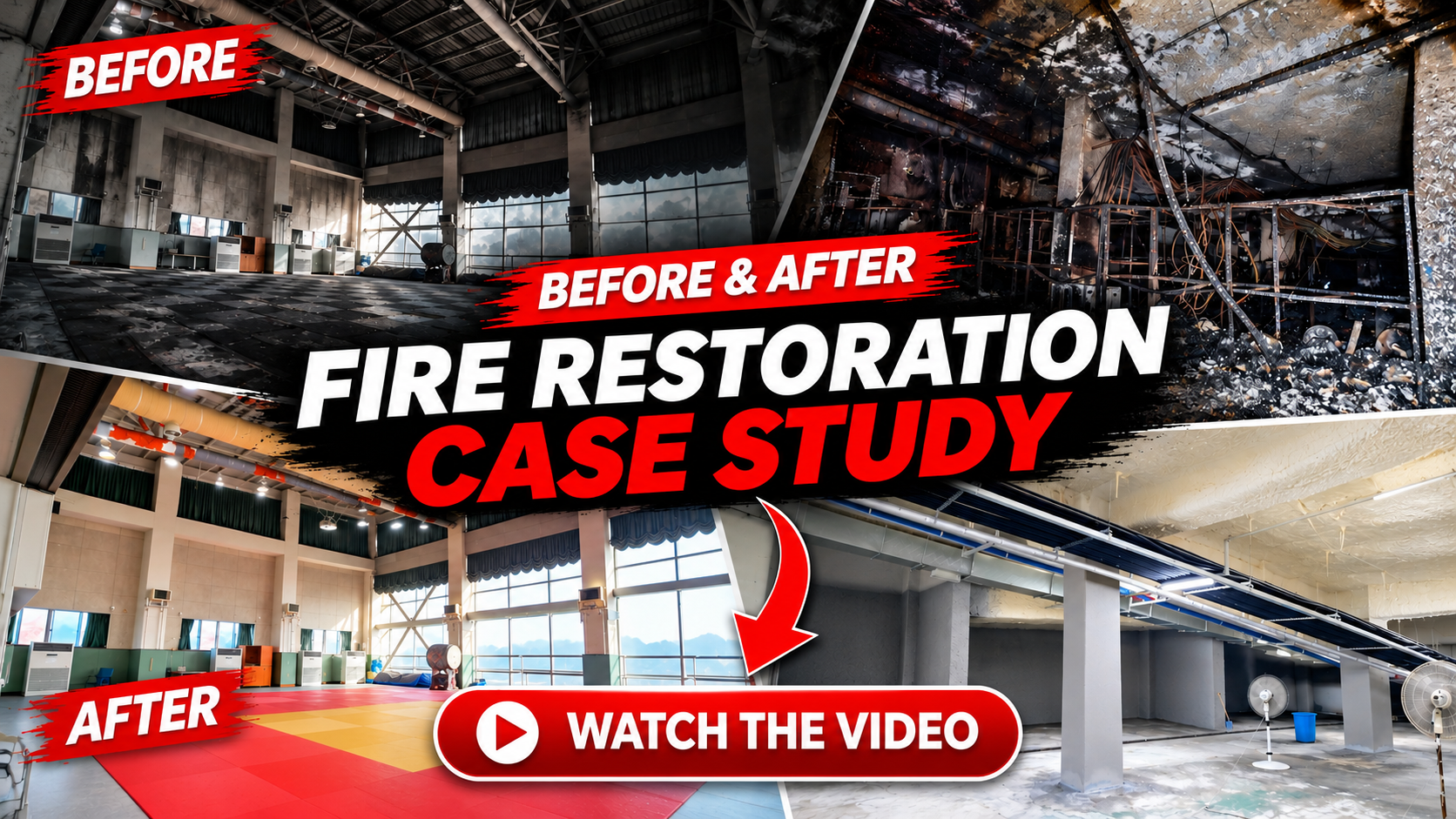
In February 2026, a fire broke out at Yongin University’s College of Martial Arts. The fire started in the basement and left soot and fire residues across key areas, including the Taekwondo and Judo training halls. The restoration scope extended beyond the building itself. Electrical and mechanical systems, internal facilities, and other affected assets also needed to be assessed and restored. With the new semester approaching, completing the work within the academic schedule was a key priority.
BELFOR Korea’s equipment restoration and construction teams worked together under one integrated restoration project. Over approximately four months, key facilities including the Taekwondo hall, Judo hall and convention hall were restored and returned to use.
Project Overview
- Client: Yongin University
- Facility: College of Martial Arts
- Incident: Fire
- Main Restoration Areas: Taekwondo hall, Judo hall, convention hall, building structures, electrical and mechanical systems
- Key Works: Soot and fire residue removal, building restoration, equipment and system restoration, integrated project management
- Restoration Period: Approximately 4 months
- Project Goal: Restore key facilities in time for the new academic semester
The Two Priorities After the Fire: Restoration Scope and Schedule
The College of Martial Arts is not a single-purpose facility. Along with the Taekwondo and Judo training halls used for classes and training, the building also includes a convention hall and several supporting spaces. After the fire, each area had to be assessed separately for soot, contamination, structural damage, and the condition of electrical and mechanical systems. Because every space served a different purpose and required a different restoration approach, the entire facility could not be treated in the same way. There was also a fixed deadline. The restoration work had to be completed in line with the university’s academic calendar.
Q. What should be restored first after a fire at a university or large educational facility?
Fire restoration in an educational facility does not end with removing visible soot. The first step is to assess the extent of contamination and damage in each area, then determine which parts of the building, electrical systems, and mechanical systems need to be restored together. At Yongin University, BELFOR Korea first assessed the condition of each affected area and then developed the restoration plan based on the findings.
Removing Soot and Fire Residues from the Building
The first stage of the restoration focused on removing soot and fire residues that had spread throughout the building. BELFOR Korea assessed not only the areas directly affected by the fire, but also spaces where smoke and soot had travelled. Once the affected areas had been identified, damaged ceilings, walls, and other building elements were restored, together with key electrical and mechanical systems.
ONE-STOP Restoration for Both Equipment and the Building
At large restoration sites, equipment recovery and construction work can interfere with one another and slow down the overall schedule. That is why establishing the right sequence of work is critical. Because BELFOR Korea manages equipment restoration together with building and facility restoration, the entire project can be coordinated as one integrated ONE-STOP restoration process. Work sequences and schedules were aligned across different areas, while tasks that could be carried out at the same time were completed in parallel to keep the overall restoration programme on track.
Q. Why Is Project Coordination Important When Restoring Multiple Facilities at the Same Time?
When different spaces such as Taekwondo halls, Judo halls, and convention facilities are restored at the same time, an inefficient work sequence can extend the overall project schedule.
This becomes especially important when building work, electrical and mechanical systems, and equipment restoration are all taking place within the same project. In these situations, managing the overall restoration programme is just as important as managing each individual workstream.
At Yongin University, the restoration covered a wide range of spaces with different functions. A key challenge was therefore to coordinate multiple restoration activities in parallel while keeping the project aligned with the university’s academic schedule.
Key Facilities Restored in 4 Months
Over approximately four months, BELFOR Korea restored key facilities at the College of Martial Arts, including the Taekwondo hall, Judo hall and convention hall. The restoration enabled students to return to classes and training after the new semester began, with the main facilities brought back into operation.
Yongin University Fire Restoration Video
Watch the video below to see the fire-affected areas at Yongin University’s College of Martial Arts and the restoration process..
Before & After photos from the Yongin University fire restoration project are available in the Case Study Flyer and Case Study Video.