Factory & Industrial Facility Fire Restoration FAQ
A. No. Even if equipment appears severely fire-damaged, restoration may still be possible if its critical components have not suffered significant structural damage. Industrial robots, CNC machines, and precision testing equipment affected by fire and soot have been successfully restored and returned to operation.
Early assessment is critical. Corrosive residues in soot can continue to damage components after the fire, so the condition of affected equipment should be assessed by restoration specialists as soon as possible.
BELFOR Korea provides component-level restoration, including PCB cleaning, followed by performance verification and restart checks to support a safe return to operation.
A. Yes. However, precision equipment requires specialized cleaning and restoration techniques rather than general cleaning.
Exposure to soot and corrosive residues can impair performance or cause equipment failure. Surface cleaning alone cannot remove contamination that has penetrated internal components and electronic circuit boards.
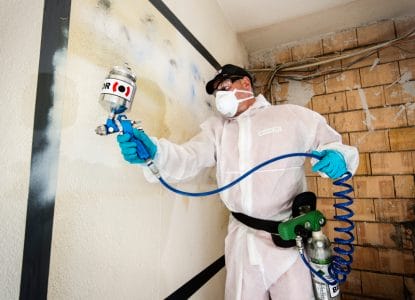
BELFOR Korea analyzes the type of contamination and materials involved, selects appropriate specialized cleaning agents, and performs a precision restoration process that includes disassembly, component-level cleaning, and reassembly.
BELFOR Korea restores a wide range of precision equipment, including semiconductor equipment, CNC machines, servers, and electrical switchgear.
A. Yes. Semiconductor equipment and printed circuit boards (PCBs) are highly sensitive to even small amounts of contamination and therefore require advanced precision cleaning techniques.
BELFOR Korea uses specialized cleaning agents and processes developed by BELFOR’s R&D Center in Munich, Germany, to remove contamination down to the electronic circuit board level.
BELFOR’s restoration solutions have been validated by major global electronics and industrial equipment manufacturers, supporting the restoration of high-tech manufacturing equipment in industries including semiconductors and battery manufacturing.
A. The restoration timeline depends on the extent of the damage and the types of equipment affected. One important factor is whether equipment and building restoration can be carried out simultaneously.
When equipment restoration and building restoration are handled by separate contractors, scheduling conflicts and coordination can extend facility downtime.
BELFOR Korea integrates precision equipment restoration and building restoration into a single project, allowing multiple workstreams to proceed in parallel and helping shorten the overall recovery timeline.
In one industrial fire restoration project, BELFOR Korea simultaneously restored precision equipment and a seven-story industrial facility, helping minimize business interruption.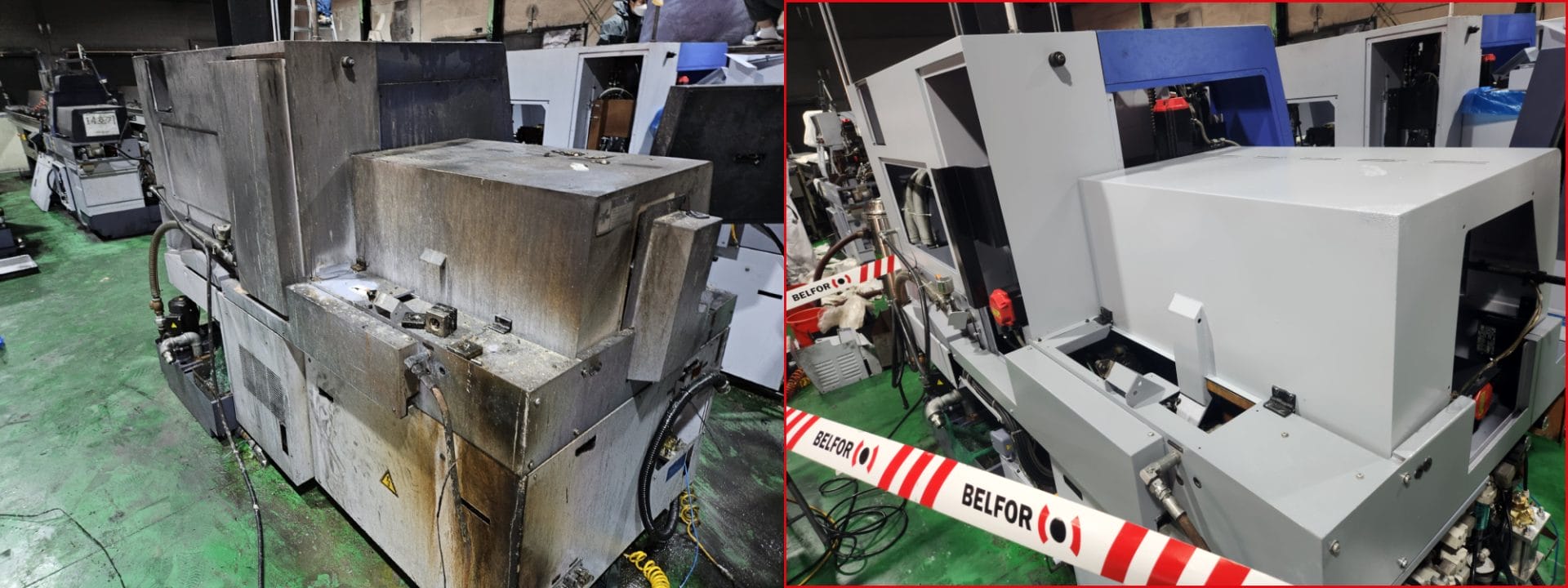
A. The speed of the initial response is a key factor in determining how quickly production can resume. If fire-damaged equipment is left untreated, corrosion can progress, reducing the number of assets that can be restored and delaying the restart of operations.
Rapid damage assessment and corrosion prevention are therefore critical to minimizing secondary damage. BELFOR Korea provides emergency response immediately after an incident, beginning with loss mitigation measures and continuing through restoration, commissioning, and performance testing to verify that equipment is ready for safe operation.
BELFOR Korea’s goal is to minimize business interruption and help customers resume production as quickly and safely as possible.
A. Restoration is not considered complete based on visual appearance alone. Depending on the type of equipment, BELFOR Korea checks for residual contamination, electrical safety, and the condition of individual components. Where necessary, commissioning, calibration, or performance testing is carried out in cooperation with the equipment manufacturer.
For precision equipment in particular, detailed documentation and final verification are just as important as the restoration work itself.
A. Battery and Energy Storage System (ESS) manufacturing and testing facilities often contain equipment that is highly sensitive to contamination, including charge/discharge equipment, control systems, PCBs, and electrical and electronic components.
Even when there is no obvious external damage, contamination or component damage may be present inside the equipment. Customized equipment may also be difficult or time-consuming to replace.
For this reason, after a fire or water damage incident, a professional damage assessment and restoration feasibility evaluation should be carried out before deciding to dispose of the equipment.
A. Yes. This is one of the key advantages of BELFOR Korea’s ONE-STOP restoration service.
Industrial fires often cause multiple types of damage simultaneously, including equipment contamination, building damage, and damage to electrical systems. When cleaning companies, construction contractors, and equipment specialists are managed separately, coordination can take additional time and extend business interruption.
BELFOR Korea manages the entire process as a single integrated project—from incident assessment and precision equipment restoration to building and facility restoration and return-to-operation support. This eliminates the need for customers to coordinate multiple restoration contractors separately.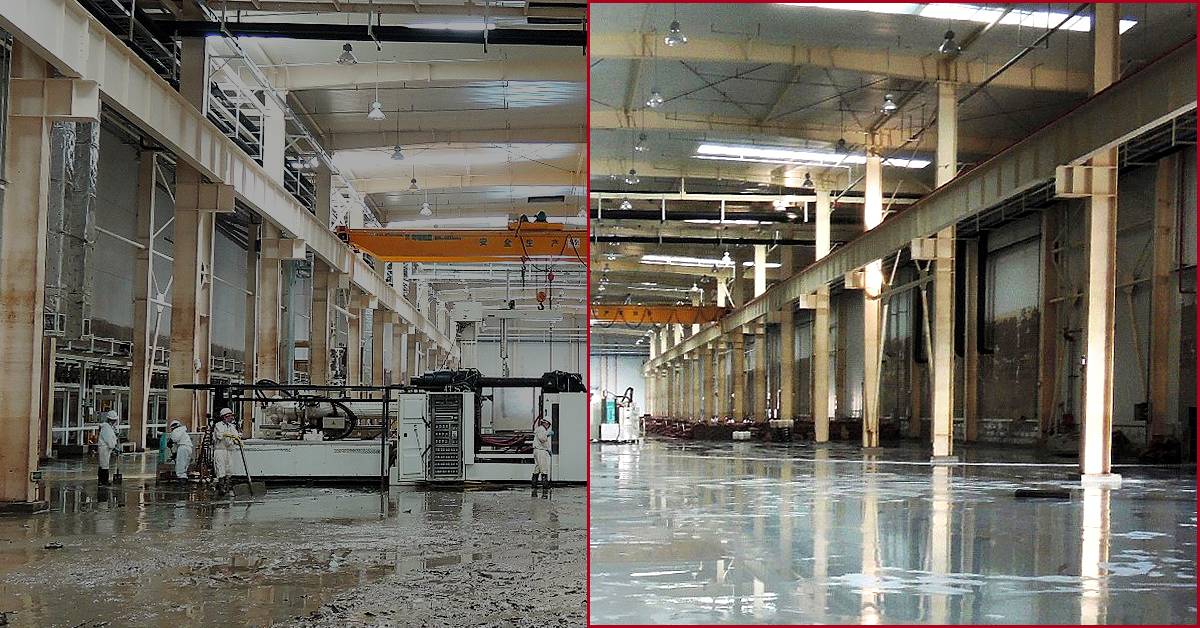
A. Yes. Large-scale sites such as logistics warehouses, manufacturing plants, and industrial facilities require the ability to rapidly mobilize significant manpower, specialized equipment, and multiple restoration teams.
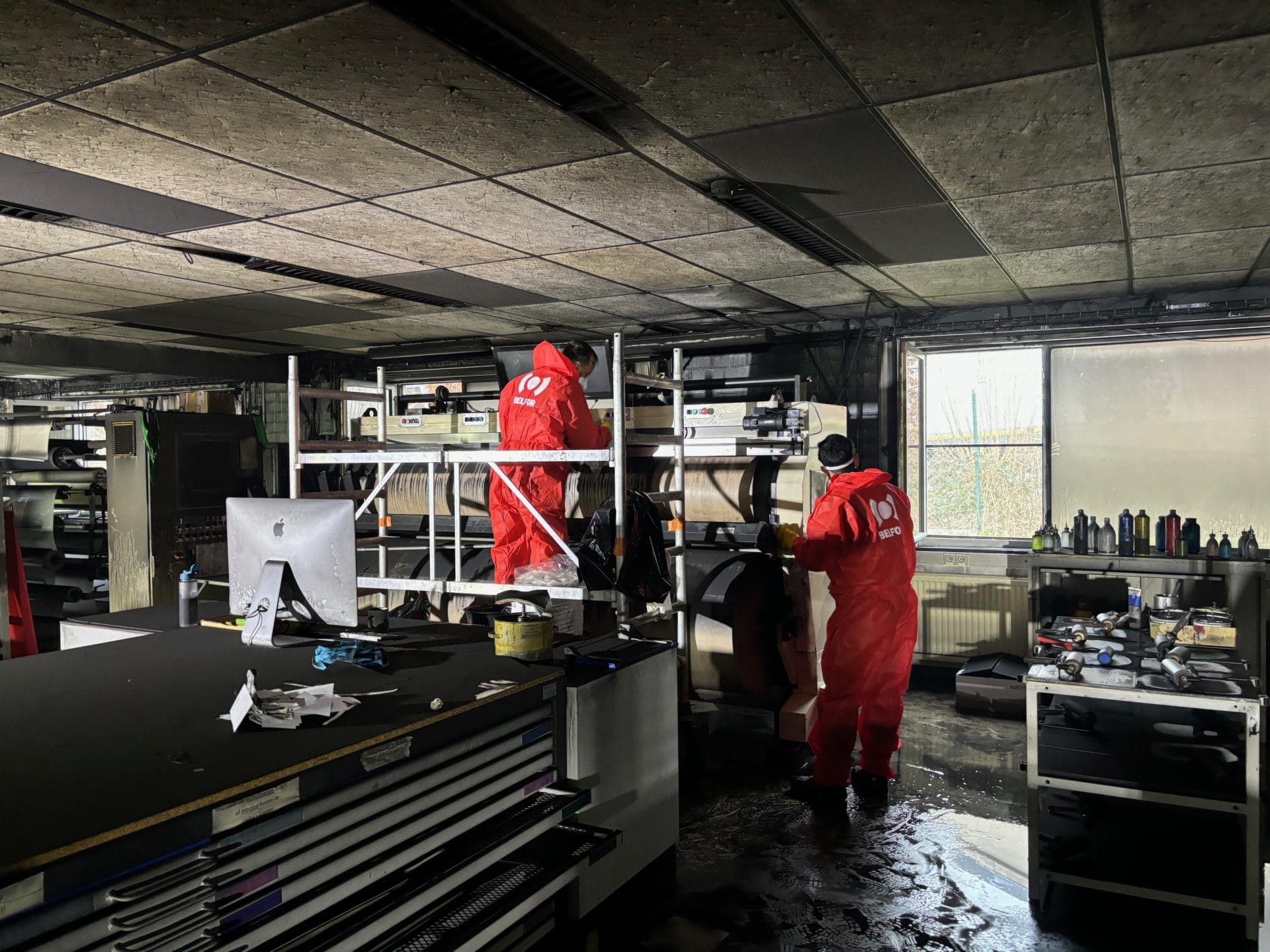
Specialist teams can carry out demolition, fire damage cleaning, building restoration, and equipment restoration simultaneously, helping reduce the overall restoration timeline.
Q. How should I choose an industrial fire damage restoration company?
A. Consider three key capabilities:
1. Can the company restore both equipment and buildings?
2. Does it have specialized precision equipment cleaning and restoration capabilities?
3. Can it respond quickly during the critical early stages after a fire?
General cleaning or interior renovation contractors may not have the capabilities required to address the complex damage caused by an industrial fire.
BELFOR Korea specializes in disaster restoration, providing ONE-STOP restoration from precision equipment to buildings and facilities, with 24/7 emergency response available across Korea.