Can Production Equipment Be Restored After a Fire?
Should Fire-Damaged Production Equipment Be Restored or Replaced?
Does all production equipment need to be replaced after a factory fire? No. Fire-damaged machinery and production equipment may be restored if they have not suffered significant direct heat damage. Even equipment located within the same fire-affected facility may have been exposed to different levels of heat, soot, firefighting water, moisture, and corrosive residues. Before deciding whether to restore, partially repair, or replace equipment, it is important to assess the condition of each affected asset individually.
How to Decide Whether to Restore, Repair, or Replace Fire-Damaged Equipment
| Option | What to Assess | Key Consideration |
| Restoration | No significant heat deformation; structural integrity and component condition can be assessed | Whether contamination and corrosion can be removed and the equipment can be returned to operation |
| Partial Repair | Some components require replacement, but the remaining equipment may be restored | Whether critical components can be replaced while the rest of the equipment is restored |
| Replacement | The supplied text does not include the assessment criteria for this row | Whether purchasing new equipment is necessary instead of restoration or partial repair |
Q. How Can You Determine Whether Fire-Damaged Production Equipment Can Be Restored?
The restoration potential of fire-damaged production equipment is assessed based on the following criteria:
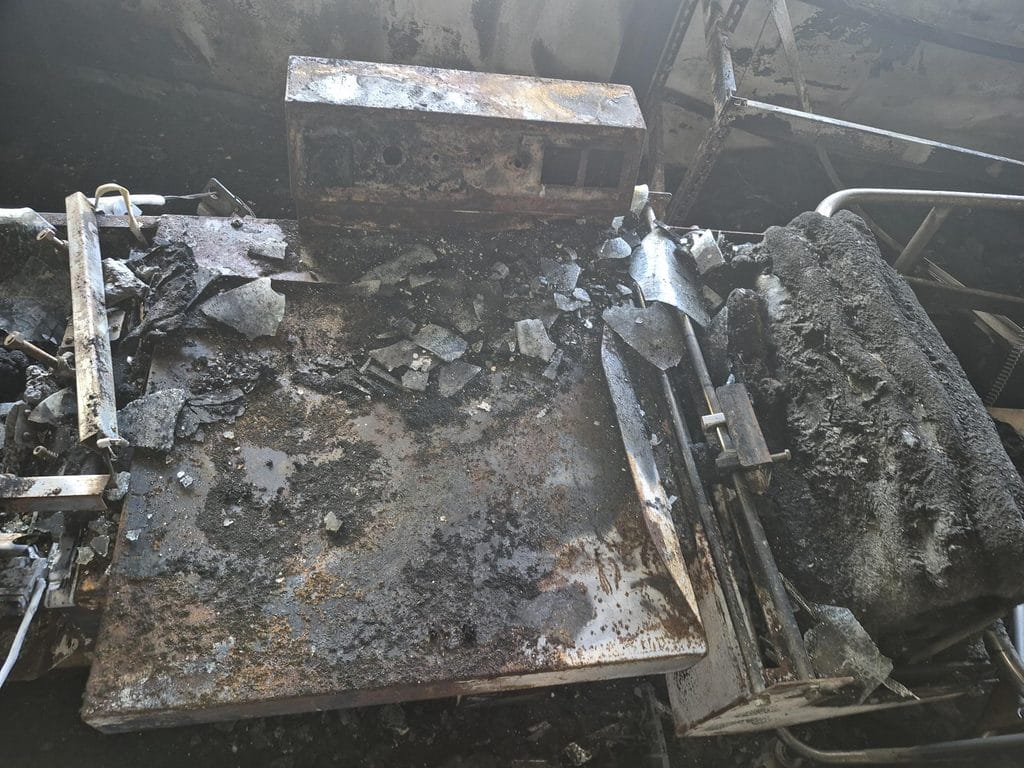
- Direct Heat Damage and Structural Deformation: If equipment has been directly exposed to flames or extreme heat, resulting in structural deformation or damage to critical components, replacement may be more appropriate than restoration. However, if soot contamination is the primary damage, restoration may still be possible.
- Extent of Soot and Fire Residue Contamination: Even if the exterior appears clean, fine contaminants may remain inside equipment, including internal components, control panels, printed circuit boards (PCBs), and connectors. For industrial production equipment, assessing the extent of internal contamination is often more important than evaluating surface conditions alone.
- Exposure to Firefighting Water and Moisture If firefighting water enters equipment, the assessment must consider potential corrosion and electrical damage. Electrical and electronic equipment, in particular, should not be powered on until it has been properly dried and its condition professionally assessed.
- Component Safety and Manufacturer Guidelines: Not all electrical components can be restored using the same methods. Depending on the type of equipment and its components, manufacturer guidelines may take precedence when determining whether restoration is appropriate.
- Post-Restoration Testing and Verification: Restored equipment must be assessed to determine whether it can be safely returned to operation. Depending on the equipment type, verification may include manufacturer inspection or approval, insulation and electrical testing, functional checks, and operational testing before the equipment is put back into service.
Q. Can Equipment Be Restored If It Is Only Contaminated with Soot?
Yes, restoration may be possible if soot contamination is the primary damage and the equipment has not suffered significant heat damage.
Fire residues can affect metal surfaces and electrical and electronic components. When moisture is also present, corrosion may develop more rapidly. Before returning the equipment to service, it is important to assess how far contamination has penetrated, whether any components have been exposed to excessive heat, and whether internal corrosion has begun.
Q. Can Fire-Damaged Electrical and Electronic Equipment Be Restored?
Yes, depending on the type of equipment, the condition of its components, and applicable safety requirements. Some electrical and electronic equipment may be suitable for restoration through specialized cleaning, drying, component replacement, and testing. However, certain components may need to be replaced for safety reasons.
Q. Can Fire-Damaged Equipment Still Be Restored If a Long Time Has Passed Since the Fire?
Restoration may still be possible, but delays can increase the risk of further damage and reduce the equipment’s restoration potential.
Over time, contamination that could initially have been removed may lead to corrosion and equipment deterioration. This is particularly important when soot, fire residues, and moisture remain present, as the condition of metal contacts and electrical and electronic components may continue to deteriorate.
Contact BELFOR Korea as soon as possible to assess the equipment’s condition and take appropriate measures to prevent further damage.
Production Equipment Fire Restoration by BELFOR Korea
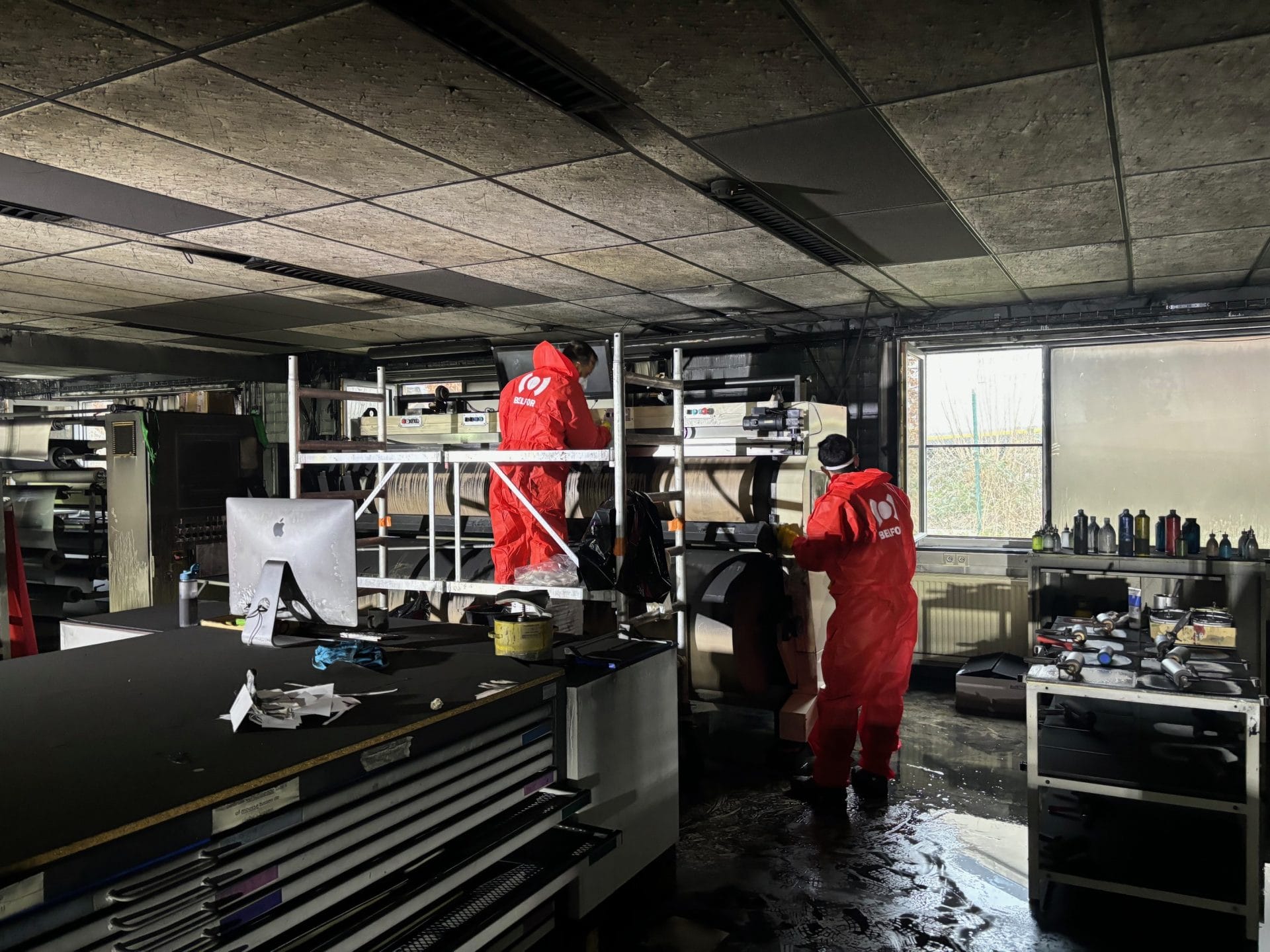
BELFOR Korea is a disaster restoration specialist providing restoration services for factories and industrial facilities affected by fire, water damage, and industrial contamination. Our expertise covers buildings, machinery and production equipment, electrical and electronic systems, and precision equipment.
From initial site assessment and damage mitigation to contamination removal, industrial equipment restoration, and support for returning equipment to operation, BELFOR Korea provides comprehensive restoration services to help industrial facilities recover and resume normal operations.
For production equipment restoration, BELFOR Korea first assesses the condition of each piece of equipment and the extent of contamination to determine its restoration potential. Where necessary, we work with equipment manufacturers or relevant technical specialists to verify equipment functionality and assess whether it can be safely returned to operation.
Frequently Asked Questions
A. No. Not all fire-damaged production equipment needs to be replaced. Each piece of equipment should be assessed individually for direct heat damage, structural deformation, internal contamination, corrosion risk, and the condition of electrical and electronic components before determining whether restoration, partial repair, or replacement is the most appropriate option.
A. It depends on the extent of contamination and the equipment’s condition. Visual inspection alone is not sufficient. Internal contamination and potential corrosion must be assessed, and it is important to determine whether the equipment’s functionality and safety can be verified after the necessary restoration work has been completed.
A. It depends on the type of equipment and its components. Some electrical equipment may be suitable for restoration through specialized cleaning, drying, and testing. However, certain components may need to be replaced for safety reasons.
A. The restoration potential assessment should begin as soon as possible once the site has been declared safe. Prolonged exposure to contaminants and moisture can lead to further corrosion and equipment deterioration.
A. Depending on the type of equipment, post-restoration verification may include visual inspections, functional testing, electrical testing, operational testing, and manufacturer inspection or approval. These checks help determine whether the restored equipment can be safely returned to operation.