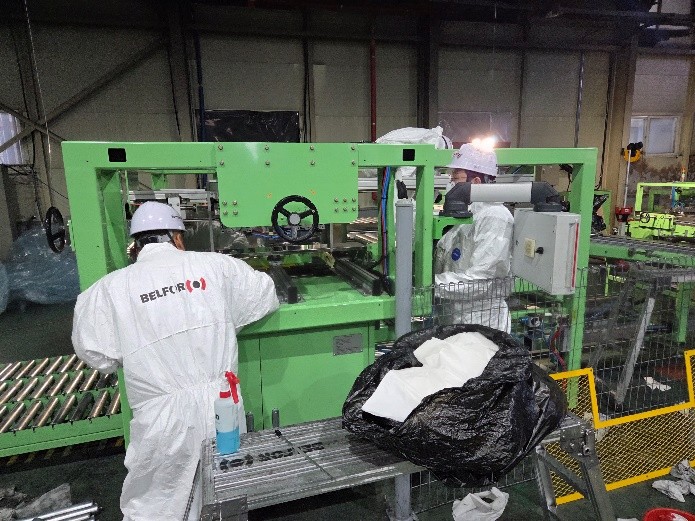
Fire Restoration Case Study: Battery Charge/Discharge & Testing Equipment
Battery testing equipment may be restorable after a fire, depending on its condition and the extent of the damage. BELFOR Korea responded to the affected site, assessed contamination across a range of equipment—including battery testing equipment and charge/discharge systems—and carried out fire contamination removal and corrosion treatment based on the condition and characteristics of each asset.
| Category | Details |
| Industry | EV· Secondary Battery Testing Facility |
| Incident Type | Fire |
| Primary Damage | Contamination and corrosion caused by soot, fire residues and chlorides |
| Scope of Work | Equipment disassembly, precision cleaning, corrosion removal, reassembly and operation verification |
Fire Can Affect Battery Testing Equipment Even If It Was Not Directly Burned.
In an industrial fire, soot and fire residues can enter equipment located near the source of the fire, even when the equipment itself was not directly exposed to flames. Battery testing facilities typically contain a large number of high-value precision systems with sensitive electrical and electronic components, including battery charge/discharge equipment, environmental chambers, control panels, and cooling systems. For this reason, the condition of the equipment cannot always be determined by external appearance alone. At this site, fire-related contamination was identified on both the exterior and interior of multiple pieces of testing equipment, and corrosion had already begun to develop on some assets.
Battery Testing Equipment Included in the Restoration
The main equipment assessed and treated for fire contamination during this project included:
- Battery charge/discharge equipment
- Secondary battery modules
- Environmental chambers
- Charge/discharge chambers
- Electrical control panels
- Refrigeration and cooling systems
The restoration assessment covered not only the battery testing equipment itself, but also the cooling and control systems required to maintain the testing environment.
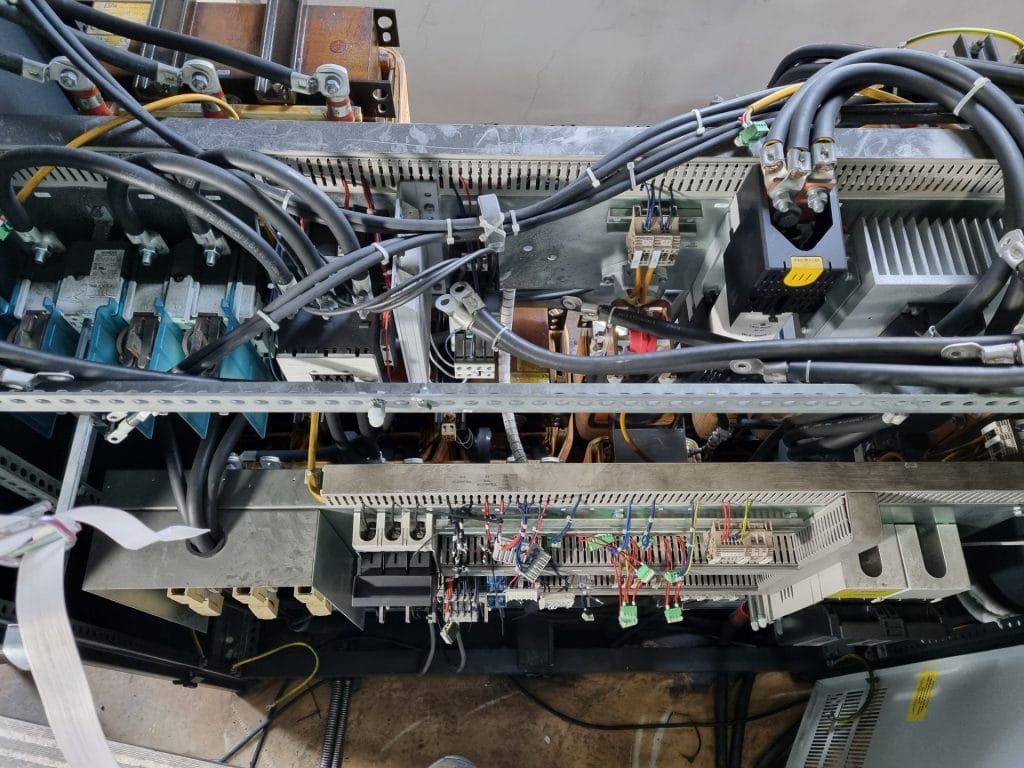
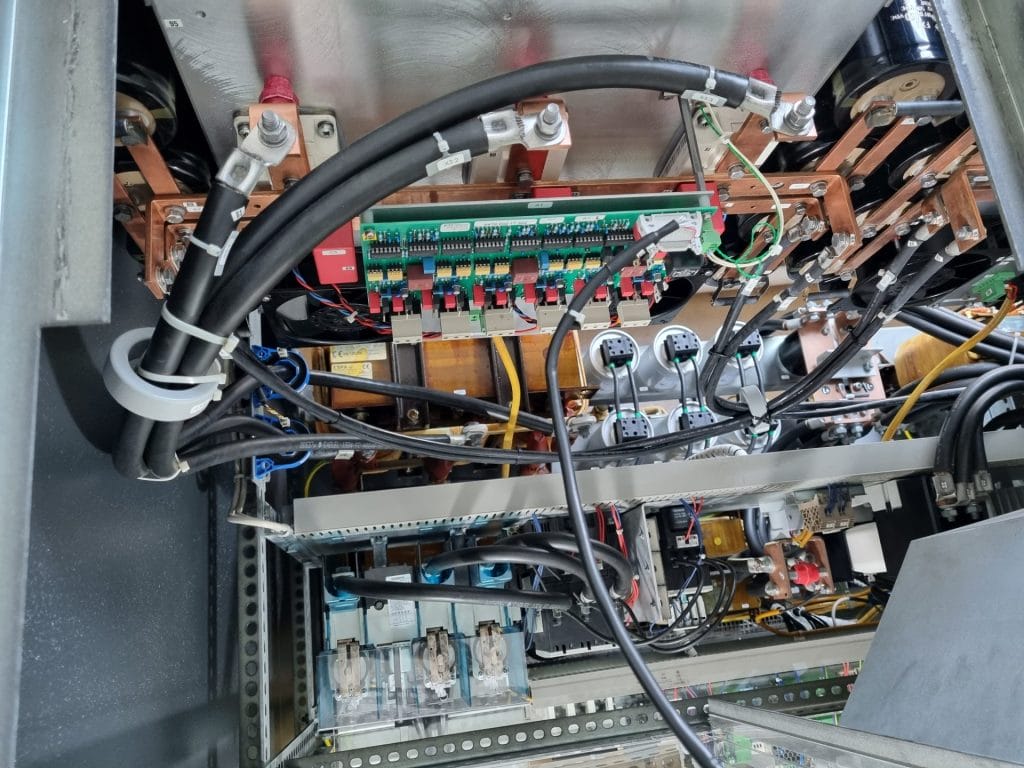
Assessing Contamination Inside Battery Charge/Discharge and Control Equipment
Cleaning only the exterior of fire-affected equipment does not reveal the extent of contamination inside. BELFOR Korea disassembled the affected equipment to the level required to access contaminated components. Specialized fire decontamination chemicals and restoration equipment were then used to remove contaminants from both internal and external surfaces. The battery charge/discharge equipment had extensive soot contamination across control panels and internal electrical and electronic components. Chloride contamination exceeding 20 μg/cm² was identified on some equipment. The contamination was present in areas and at levels that required BELFOR Korea’s specialized precision cleaning process. After a fire, it is therefore important to assess not only visible soot but also hidden contamination and corrosion inside the equipment.
How Is Fire-Damaged Battery Charge/Discharge Equipment Restored?
For this project, BELFOR Korea followed these key steps:
1. Equipment and Contamination Assessment: The condition of fire-exposed testing equipment and electrical and electronic systems was assessed.
2. Access to Internal Components: Equipment was disassembled as necessary to access contaminated internal components.
3. Fire Contamination Removal: Specialized fire decontamination chemicals and restoration equipment were used to remove contaminants from internal and external surfaces.
4. Corrosion Removal: Where corrosion was identified, contamination and corrosion treatment was performed according to the condition of the equipment and individual components.
5. Reassembly and Operational Verification: After restoration, the equipment was reassembled to its original configuration and power-on testing was performed to verify its condition.
Fire Restoration of Battery Testing Equipment Completed
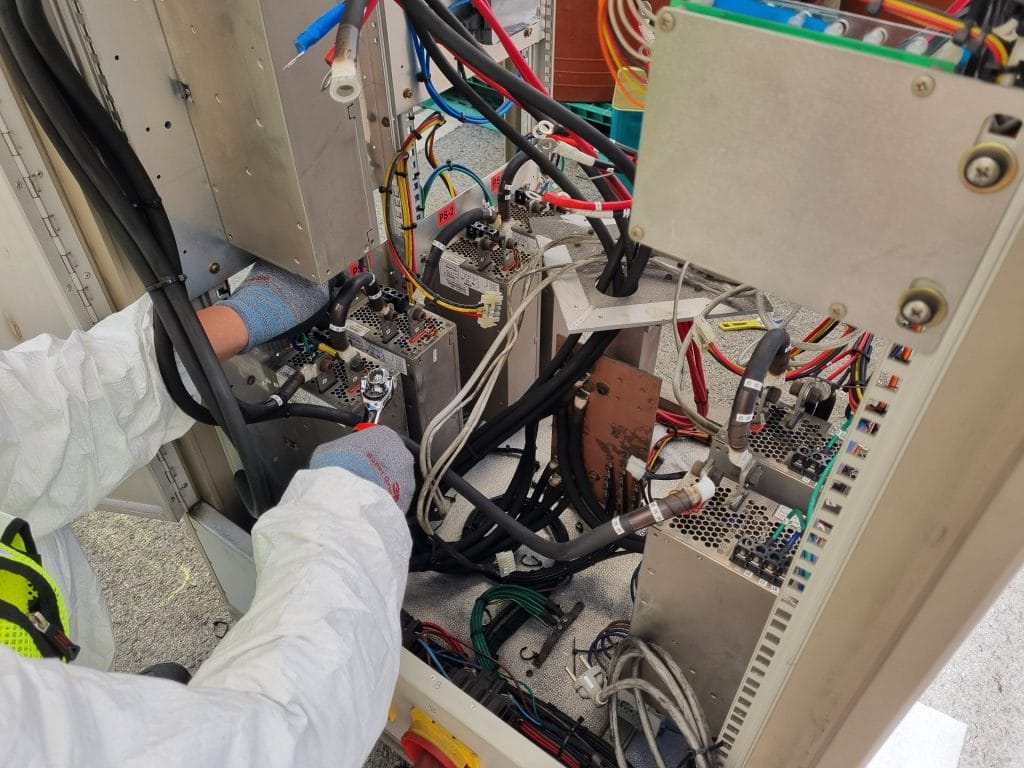
Over approximately one month, BELFOR Korea restored more than 30 pieces of equipment at the site, including battery testing equipment, charge/discharge equipment, chambers, and charge/discharge systems. This project demonstrates that even high-value battery testing equipment affected by fire may be a candidate for restoration, depending on the extent and type of damage.
Battery Testing Equipment Fire Restoration FAQ
A. Not all fire-damaged equipment can be restored. Restoration feasibility depends on the extent of physical damage and contamination. However, where damage from soot, fire residues, or firefighting water remains within a restorable range, professional restoration may be possible. A detailed assessment should therefore be carried out before deciding whether fire-affected battery testing equipment needs to be replaced.
A. It depends on the extent of direct heat damage and internal contamination. If BELFOR Korea’s specialists determine that the equipment is within a technically restorable range, battery charge/discharge equipment may be restored. In this case, charge/discharge equipment was included in the restoration scope, with contamination removed from internal electrical and electronic components and control systems.
A. Yes. Smoke, soot, and fire residues can migrate into nearby equipment during a fire. Even when there is little visible external damage, electrical panels, cooling fans, control modules, and other internal components should be assessed for contamination.
A. The decision should be based on the extent of physical damage, fire contamination, the condition of internal components, and the presence of corrosion. For high-value testing equipment in particular, assessing its condition and technical restoration feasibility before deciding on replacement can help avoid unnecessary asset replacement.
Fire-Damaged Industrial Equipment May Be Restorable.
BELFOR Korea assesses contamination in electrical, electronic, and precision equipment following industrial fire and water damage and provides restoration services tailored to the condition of each asset. If your facility has fire-damaged battery testing equipment, battery charge/discharge systems, or industrial electrical and electronic equipment, contact BELFOR Korea for a professional damage and restoration assessment.