What to Do in the First 24 Hours After a Fire: A Practical Guide for Homeowners and Business Owners
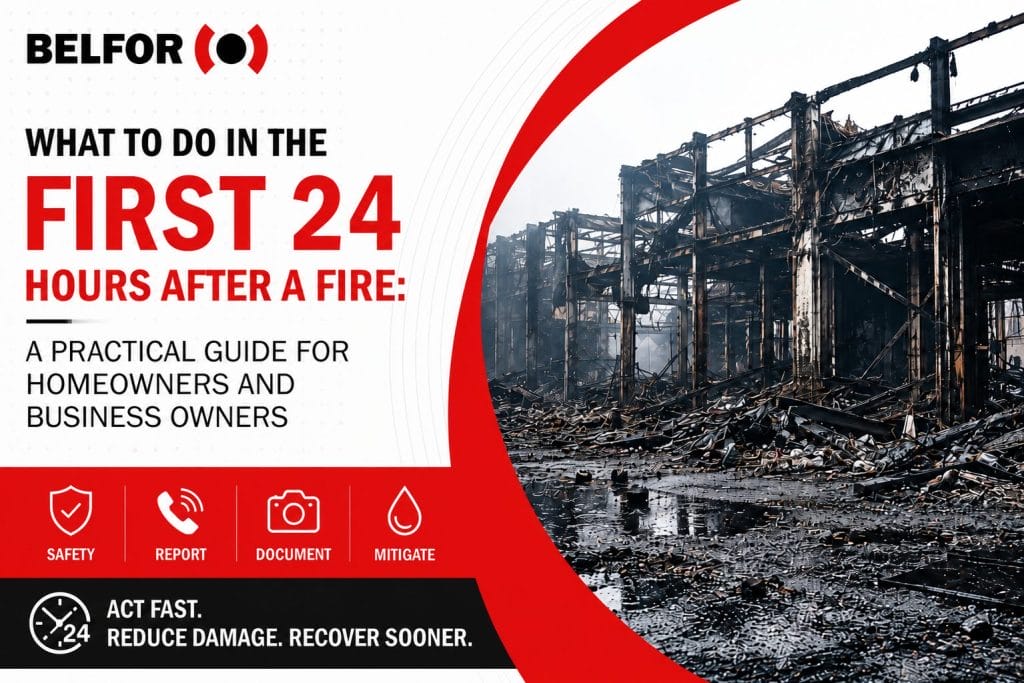
Experiencing a fire can be overwhelming. While it may feel like the crisis is over once the flames have been extinguished, the recovery process is only beginning.
Even after the fire is out, your property may continue to suffer damage from smoke, soot, water used during firefighting efforts, and residual moisture. These hidden effects can impact walls, furniture, electrical systems, machinery, and even the structural integrity of a building if they are not addressed promptly.
For homeowners, this could mean losing valuable personal belongings and cherished memories. For businesses, every hour of downtime may result in lost revenue, operational disruption, and increased recovery costs.
That’s why the first 24 hours after a fire are crucial. Taking the right actions early can help minimize secondary damage, improve the chances of restoring affected property, and speed up the recovery process.
This guide outlines the essential steps every homeowner and business owner should take immediately after a fire.
Why Are the First 24 Hours So Important?
Many people assume that the damage stops once the fire has been extinguished. In reality, secondary damage begins almost immediately.
Smoke residues and soot particles settle on virtually every exposed surface. Combined with moisture from firefighting efforts, they can contribute to corrosion, staining, unpleasant odors, and damage to sensitive electronics and mechanical equipment.
Meanwhile, water used to extinguish the fire may penetrate walls, ceilings, floors, insulation, and other porous materials. If left untreated, trapped moisture can lead to mold growth, material deterioration, and costly long-term damage.
The sooner restoration begins, the greater the opportunity to reduce repair costs and preserve valuable property.
1. Prioritize Safety Before Re-entering the Property
Never rush back into a fire-damaged building simply because the flames have been extinguished.
The property may still present serious hazards, including:
- Structural instability caused by extreme heat
- Damaged electrical systems
- Gas leaks or hazardous materials
- Falling debris
- Smoke and airborne particles that may affect respiratory health
Always wait until emergency responders or the relevant authorities confirm that the building is safe to enter.
Remember: Your safety and the safety of everyone around you must always come before protecting property.
2. Document the Damage Before Moving or Cleaning Anything
Once authorities have confirmed it is safe to enter the property, your first priority should be documenting the damage. Take photographs and videos of every affected area before moving, cleaning, or disposing of any items.
Be sure to document:
- The building structure
- Individual rooms
- Furniture
- Electrical appliances
- Machinery and equipment
- Inventory or stock
- Important documents
If you own a business, prepare an inventory of damaged assets, including model numbers, serial numbers, and estimated values whenever possible. This information can significantly assist the insurance claims process and damage assessment.
3. Avoid Cleaning Up on Your Own
It may be tempting to wipe away soot or ventilate the property immediately, but improper cleaning methods can actually make the damage worse.
For example, wiping certain types of soot with water may cause the residue to penetrate deeper into surfaces. Likewise, using unsuitable cleaning chemicals can permanently damage finishes, fabrics, or delicate materials.
Electrical equipment and machinery should never be switched on without proper inspection. Even if they appear undamaged externally, smoke residues and moisture may have affected internal components.
If you are unsure about the condition of your property, it is always advisable to have it professionally assessed before beginning any cleanup or restoration work.
Quick Checklist: Immediate Actions After a Fire
✔ Ensure everyone is safe.
✔ Wait for official clearance before entering the property.
✔ Photograph and document all damage.
✔ Notify your insurance company as soon as possible.
✔ Avoid cleaning soot or operating electrical equipment until it has been assessed.
Why Time Matters After a Fire
Many people assume that once the flames are extinguished, the damage stops. In reality, this is when secondary damage begins.
Smoke residues, soot particles, and moisture left behind from firefighting efforts continue to affect your property long after the fire is out. Delaying the restoration process, even by a few hours, can allow damage to spread, turning items that could have been restored into permanent losses.
For example:
- Soot can become more difficult to remove as it settles deeper into surfaces.
- Residual moisture can lead to mold growth, particularly inside walls, ceilings, and other hidden spaces.
- Corrosive residues from smoke may begin damaging metal surfaces, machinery, and electronic components.
- Smoke odors can penetrate porous materials such as wood, carpets, upholstery, and insulation, making odor removal significantly more challenging over time.
The sooner restoration begins, the greater the opportunity to preserve property, reduce repair costs, and shorten the recovery timeline.
Hidden Damage Can Be More Serious Than Visible Damage
After a fire, most people focus on the obvious signs of damage, charred walls, burned furniture, or heavy soot deposits.
However, some of the most significant damage is often hidden from view.
Electrical Systems
Electrical equipment may appear to be functioning normally, but that does not necessarily mean it is safe to use. Heat exposure, soot contamination, and moisture can compromise internal components, increasing the risk of future equipment failure or electrical hazards.
HVAC Systems
Smoke particles can travel through air conditioning and ventilation systems, spreading soot and persistent odors throughout the property. Without proper cleaning, contaminants may continue circulating long after the fire has been extinguished.
Building Structure
A building may appear structurally sound from the outside, while hidden structural elements have been weakened by extreme heat. Professional inspections help determine whether the property is safe for reoccupation and identify any repairs that may be required before returning to normal use.
Did You Know?
Soot is more than just black dust. It contains microscopic particles and combustion by-products that can penetrate surfaces and contaminate building materials, electrical equipment, and mechanical systems. If left untreated, these residues may contribute to corrosion, persistent odors, and ongoing deterioration.
When Should You Contact a Restoration Professional?
Many property owners wonder whether professional restoration services are necessary, particularly when the damage appears minor. In reality, early assessment is often the key to preventing more extensive and costly damage.
Consider contacting a restoration specialist if:
- Smoke or soot has affected multiple rooms or large areas.
- Significant amounts of water remain after firefighting efforts.
- Electrical equipment, machinery, or sensitive electronics have been exposed.
- Smoke odors persist despite ventilation.
- You are unsure whether the building is structurally safe.
- Your business needs to resume operations as quickly as possible.
A professional assessment provides a clear understanding of the extent of the damage and helps determine the most appropriate restoration strategy before recovery work begins.
Checklist: What to Do Within the First 24 Hours After a Fire
✔ Ensure everyone is safe.
✔ Wait for official clearance before re-entering the property.
✔ Photograph and document all visible damage.
✔ Notify your insurance provider as soon as possible.
✔ Do not switch on electrical appliances or equipment that may have been affected.
✔ Avoid attempting to clean soot or smoke damage yourself unless you have received appropriate guidance.
✔ If you operate a business, assess the impact on operations and begin planning for business continuity.
✔ Contact a professional restoration company for a comprehensive damage assessment.
Conclusion
The fire may be out, but the recovery process has only just begun. Smoke, soot, water, and residual moisture can continue damaging your property long after the flames have been extinguished. Taking the right actions during the first 24 hours can significantly reduce secondary damage, improve restoration outcomes, and help you return to normal as quickly as possible.
Whether you own a home, retail store, office building, hotel, or industrial facility, responding promptly and following the appropriate recovery steps can make a substantial difference in protecting your property and minimizing long-term losses.
BELFOR Is Ready to Help You Recover
Recovering from fire damage involves far more than removing soot or eliminating smoke odors. It requires a systematic approach that includes damage assessment, moisture control, smoke and soot removal, structural drying, and property restoration.
At BELFOR Thailand, our experienced restoration specialists provide comprehensive fire damage recovery solutions tailored to the unique needs of each property. From residential homes to commercial buildings and industrial facilities, we are committed to helping our clients recover safely, efficiently, and with minimal disruption.


