Understanding Cross-Contamination Risks After a Multi-Hazard Disaster
Key Takeaways
- Contamination risks post-disaster often extend far beyond the initial incident, especially in multi-hazard events involving fire, water, and chemicals.
- Contaminants can travel through air, water, and building systems, reaching equipment, materials, and controlled environments faster than expected.
- In sensitive settings such as semiconductor facilities, even microscopic particles can cause production disruptions and yield loss.
- Early-stage actions such as movement and premature cleanup can unintentionally worsen the spread of contamination and increase recovery complexity.
- A structured, site-wide approach that combines containment, mapping, and targeted remediation is critical to reducing downtime and preventing recontamination.
How Contamination Risks Post-Disaster Escalate in Multi-Hazard Events
In complex disaster scenarios, such as fires followed by water damage or chemical spills during floods, contaminants rarely remain contained. What appears to be localised damage often masks deeper risks, particularly when pollutants are carried through the air or water, or via operational movement across a site.
Such situations introduce serious contamination risks in the aftermath of a disaster, with affected areas extending beyond what is immediately visible. For facilities that depend on controlled environments, even minor contamination can disrupt operations, delay recovery, and increase total loss. Consequently, understanding how cross-contamination develops is key to effectively managing these cascading risks.
In post-incident environments, contamination rarely originates from a single source. For instance, burnt insulation and cable residues from electrical fires can release fine particulates that are easily drawn into return air systems. Similarly, fire suppression agents may settle across equipment surfaces, leaving behind residues that are not always visible but can interfere with sensitive processes.
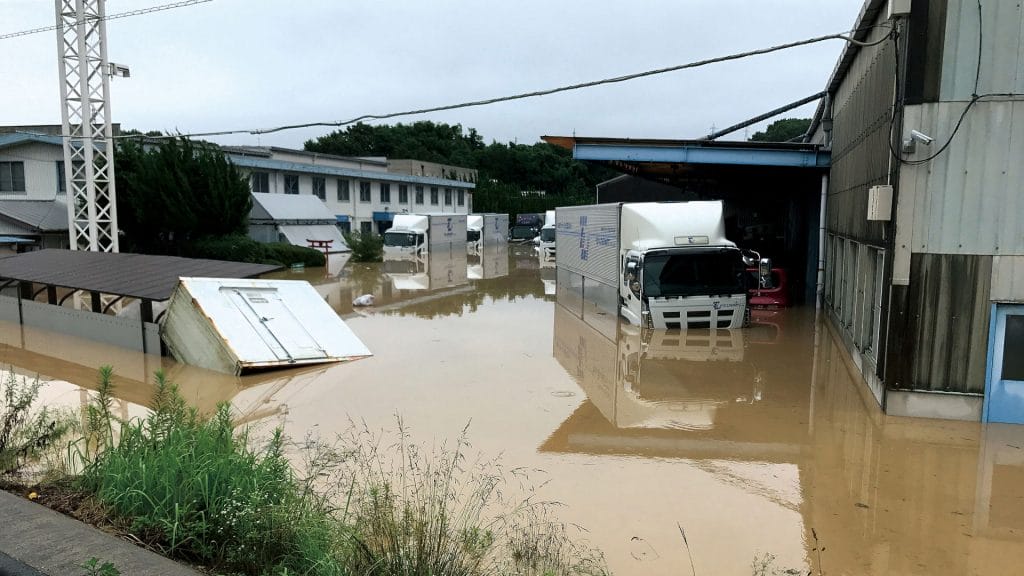
In flood-related events, silt and debris can dry and become airborne during restart activities, particularly when operational movement resumes across the facility. Even minor repair works can introduce particles that exceed controlled thresholds if containment is not properly managed. Such scenarios highlight how quickly contamination can extend beyond the initial incident zone.
Multiple Hazards Increase the Number of Contamination Pathways
When two or more incidents occur together, such as fire and flooding, the behaviour of contaminants becomes significantly more challenging to control. Smoke particles, ash, and chemical residues do not stay in one place. Water from suppression efforts or flooding can carry these substances into adjacent areas, saturating walls, ceilings, and flooring that were never directly exposed.
This creates layered contamination, in which pollutants permeate multiple media simultaneously. In the early stages after an incident, movement within the facility often contributes to further spread. Foot traffic, equipment relocation, and premature clean-up efforts can disturb settled contaminants, redistributing them into previously unaffected areas. This reflects broader ISO standards seen in controlled environments, where even small disturbances can alter contamination conditions.
What begins as a contained event can quickly evolve into a broader environmental issue if these pathways are not controlled early.
Contaminants Reach Machinery, Products, and Storage Zones Quickly
In warehouses, laboratories, and production environments, contamination can cause damage without being visible. Airborne particles may settle onto equipment and materials, and waterborne contaminants can dry into residues that subsequently become airborne.
This issue becomes particularly critical in semiconductor environments, where meticulous cleanroom particle control is essential. Even microscopic contamination can interfere with photolithography and deposition stages, causing defects that lead to full batch rejection. Such occurrences introduce immediate risks to wafer yield, impacting both production output and overall process stability.
Even materials that appear intact may fail quality checks. Furthermore, equipment can underperform or malfunction during restart due to internal contamination that remained initially undetected.
In many cases, early-stage intervention, such as professional dust removal, helps mitigate the risk of particles settling deeper into equipment or recirculating into controlled environments.
Building Systems Can Spread Contaminants Across Floors and Units
Contamination frequently spreads through systems that are not immediately visible. Ventilation systems, for example, can draw in smoke particles and redistribute them across multiple zones. Drainage systems may carry contaminated water between floors, while cable conduits and internal voids allow pollutants to bypass physical barriers.
Without comprehensive site mapping and isolation strategies, these pathways accelerate the spread of post-incident contamination. An issue that is initially contained can thus extend across floors, departments, and interconnected systems, rendering recovery far more complex than anticipated.
When contaminants move through ventilation or drainage systems, more specialised methods, such as chemical decontamination, may be required to address residues that standard cleaning cannot remove.
Secondary Contamination Delays Recovery and Increases Total Loss
As contamination disperses and settles across multiple locations, the recovery process becomes significantly more resource-intensive. Surfaces that could have been cleaned early may subsequently necessitate removal or replacement. Furthermore, equipment not initially identified as compromised may later fail due to internal contamination.
This directly impacts recovery processes in semiconductor facilities and other high-precision environments, where even minor inconsistencies can halt operations. In some instances, facilities resume operations only to experience secondary failures, necessitating additional shutdowns and prolonging downtime.
Such delays do not occur in isolation; they compound, significantly increasing operational costs and extending recovery timelines far beyond the scope of the original incident.
Controlling Contamination Requires a Structured, Site-Wide Approach
Effective recovery depends on understanding the movement of contamination across the entire site, rather than solely within the immediate incident area. This is particularly crucial when managing post-disaster contamination risks, as affected zones often extend beyond what is initially visible. The process commences with technical mapping, environmental testing, and air quality monitoring to accurately identify impacted areas.
A structured approach typically involves isolating contaminated zones, establishing controlled movement pathways, and managing airflow to prevent cross-zone transfer. Recovery proceeds in stages, commencing with stabilisation and containment, followed by targeted remediation and environmental validation, to ensure conditions are suitable for a safe restart.
Where biological contaminants are present, targeted solutions, such as biodecontamination services, are employed to ensure affected areas are treated safely and thoroughly. The sequence is critical. Without proper containment, cleaning efforts can inadvertently redistribute contaminants, thereby undermining recovery progress.
Conclusion: A Controlled Approach Makes Recovery More Reliable
Post-disaster contamination is rarely limited to visible elements. It permeates air systems, settles into materials, and can resurface during recovery if not properly managed. Left unaddressed, these hidden risks can prolong downtime and compromise operations long after the initial incident.
BELFOR supports businesses in managing complex contamination scenarios through an integrated, full-site recovery approach. Rather than treating contamination as isolated cleaning tasks, their process addresses how pollutants move across systems, thereby reducing recontamination and supporting a more stable return to operations.
If your facility is facing post-disaster contamination risks, contact BELFOR today to adopt a more coordinated approach and restore operations with greater clarity and control.
