Apartment Water Leaks: Frequently Asked Questions Answered
Discovering a water leak in your apartment can leave you with a lot of questions.
“What happened?”
“Should I contact the building management office?”
“Does my insurance cover this?”
“How much will the repairs cost?”
“Is the upstairs neighbor responsible for the damage?”
In apartment buildings, the visible signs of water damage may not indicate the actual source of the leak. Depending on the cause, responsibility for the damage, insurance coverage, and the scope of restoration work can vary.
Q. What Should I Do First If There Is a Water Leak in My Apartment?
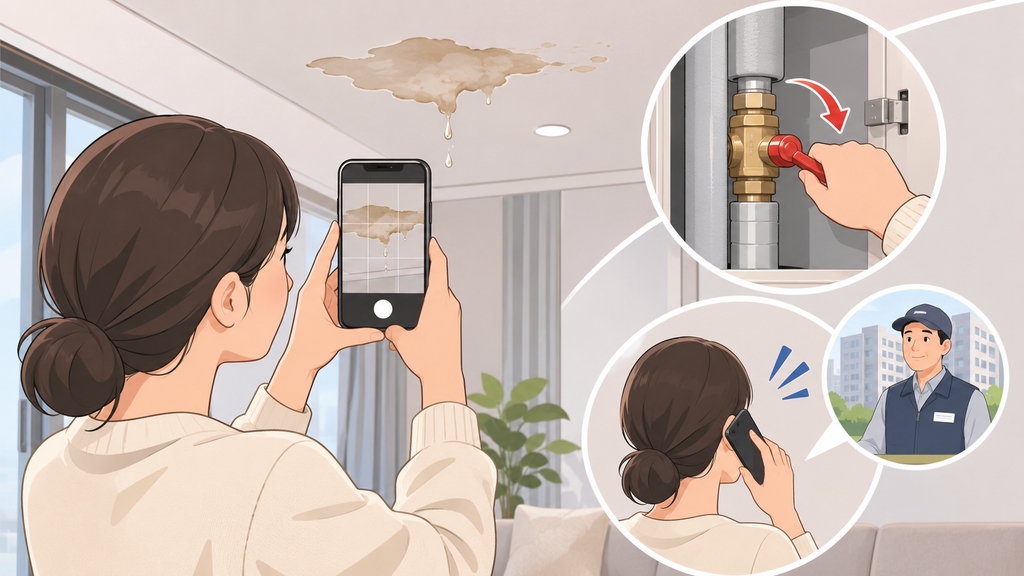
The first priority is to stop further water intrusion and document the damage with photos and videos. If the leak is ongoing, stop using the water supply or affected plumbing fixtures where it is safe and possible to do so. Notify the building management office and any affected residents. The recommended steps are:
- Stop or minimize further water intrusion
- Take photos and videos of the current condition of affected areas
- Notify the building management office and relevant residents
- Check your insurance coverage and report the incident to your insurer
Personal liability insurance generally covers your legal liability for damage caused to others. Damage to your own apartment and damage caused to a neighboring apartment may require different types of insurance coverage.
Q. Is the Upstairs Neighbor Always Responsible for Water Damage Repairs?
The first step is to identify the actual source of the leak and determine who is responsible.
Water leaking through your apartment ceiling does not necessarily mean the upstairs neighbor is responsible. The leak may originate from plumbing or waterproofing within the upstairs apartment, but it could also come from common areas of the building, such as shared plumbing, exterior walls, or the roof.
Therefore, it is important to identify where the leak originated, rather than relying solely on where the water damage is visible. Once the cause of the leak and the responsible party have been established, you can determine who should cover the repair costs and whether insurance coverage may apply.
Q. Who Is Responsible for Water Leaks from Shared Plumbing in an Apartment Building?
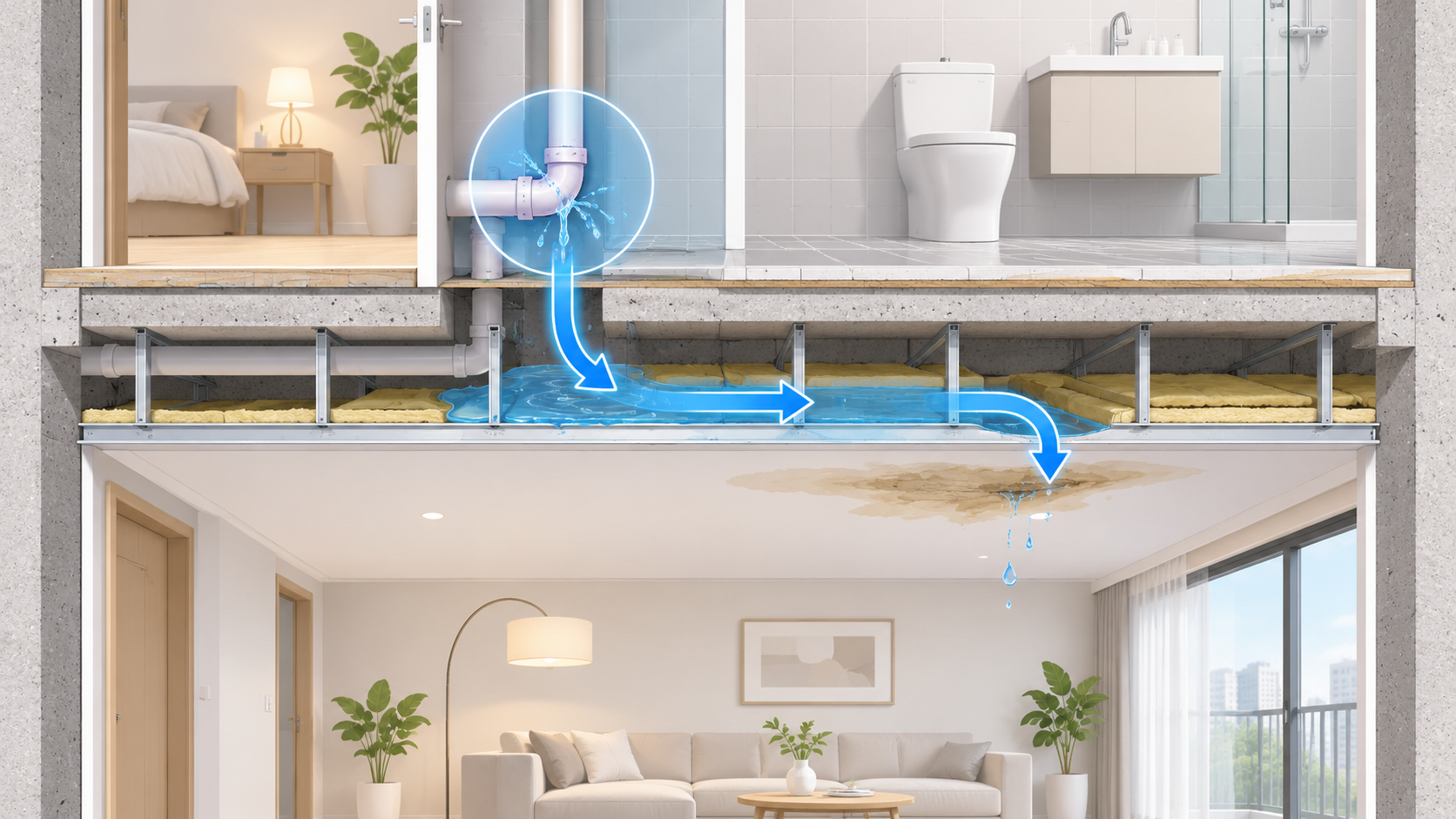
If the leak originates from a common area, the first step is to check the building management’s responsibilities and any applicable building insurance coverage.
Water leaks from shared plumbing, roofs, exterior walls, or other common areas of an apartment building may involve different responsibilities than leaks originating within an individual apartment. In such cases, notify the building management office and ask them to investigate whether the leak originated from a common area. You should also check whether the building has insurance that may cover the damage.
Q. Who Pays for Water Damage Repairs: The Landlord or the Tenant?
Responsibility depends on the cause of the leak and who is responsible for maintaining the affected property or equipment.
Liability may differ depending on whether the water leak resulted from a problem with the building structure or plumbing, or from an incident related to the occupant’s use of the property. If a water leak occurs in a rented apartment, it is advisable to identify the cause and review the insurance coverage held by both the landlord and the tenant.
Q. Does the Apartment Affected by the Leak Have to Pay the Insurance Deductible?
Insurance coverage, deductibles, and exclusions vary depending on your insurance policy and any additional coverage you have purchased. It is also important to distinguish between water damage to your own apartment and damage caused to another apartment by a leak originating from your property.
Personal liability insurance generally applies when you are legally responsible for damage caused to others. For water damage within your own apartment, you may need to check separate coverage under your home insurance policy, such as coverage for water damage caused by plumbing leaks.
Q. Does Personal Liability Insurance Cover Water Damage Repairs in My Own Apartment?
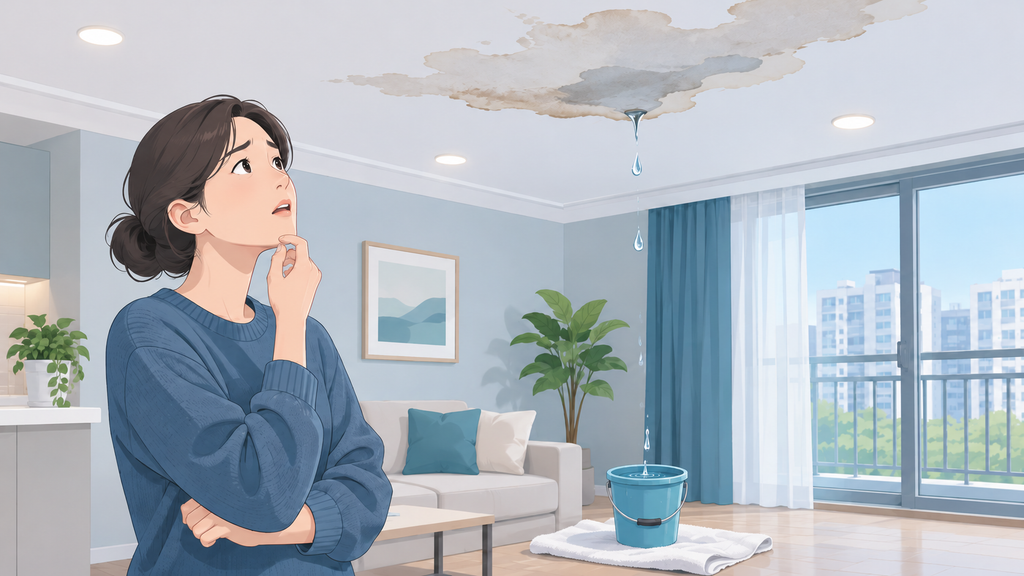
Personal liability insurance primarily covers your legal liability for damage caused to other people or their property. Water damage to your own apartment and damage caused to a downstairs neighbor’s apartment may require different types of insurance coverage.
Q. Does the Apartment Affected by a Water Leak Have to Pay the Insurance Deductible?
It is important to distinguish between the amount covered by the insurance company and the portion payable by the party legally responsible for the damage. Under personal liability insurance, the deductible is generally the amount the policyholder or insured person is responsible for paying, rather than an amount automatically deducted from the compensation owed to the affected neighboring apartment.
Q. Can I Still Receive Compensation for Water Damage If the Upstairs Neighbor Has No Insurance?
The absence of insurance does not eliminate legal liability for water damage. If responsibility for the leak is established, the affected residents may discuss the scope and cost of repairs directly with the responsible party. It is advisable to prepare supporting documentation, including evidence identifying the source of the leak, photos of the damaged areas, and an itemized repair estimate. Any agreements reached should be recorded in writing, such as through text messages or a written agreement.
Q. Can I Start Water Damage Restoration Before Contacting My Insurance Company?
If emergency repairs are necessary to prevent further damage, immediate action may be required. However, whenever possible, report the incident to your insurance company before beginning major demolition or restoration work.
Q. What Documents Do I Need to Submit for a Water Damage Insurance Claim?
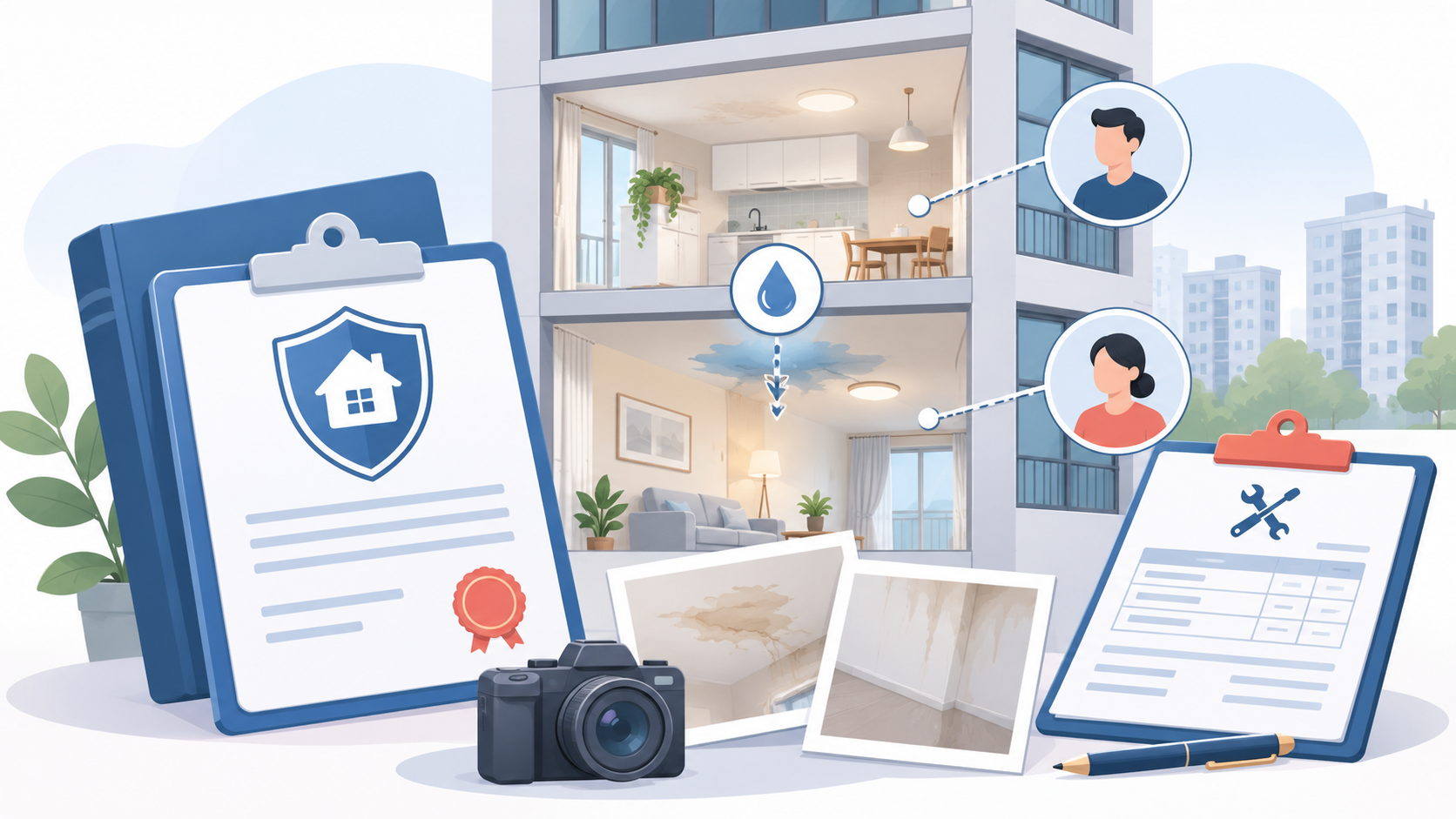
It is important to keep records that help establish the cause of the leak and the actual scope of water damage restoration. The specific requirements may vary depending on the incident and insurance policy, but the following documents are generally required.
- Photos and videos taken when the water leak occurred
- Photos of water-damaged ceilings, walls, and floors
- Photos showing the condition of affected furniture and household items
- Water leak inspection findings or assessment reports
- Repair cost estimates prepared before restoration work
- Detailed records of repair and restoration work performed
- Receipts or bank transfer records
- Photos documenting the restoration process
- Photos showing the completed restoration work
The documents required by the insurance company and the scope of coverage may vary depending on the circumstances of the incident and your insurance policy. After reporting the claim, check with your insurance representative to confirm which documents are needed.
Q. Can I Repair Water-Damaged Walls or Ceilings Before Identifying the Source of the Leak?
The first step is to identify the source of the leak and stop further water intrusion. If the underlying cause has not been addressed, newly installed wallpaper or ceiling finishes may suffer water damage again.
Once the source of the leak has been identified and further water intrusion has been prevented, the next step is to assess the affected areas and carry out the necessary drying and water damage restoration work.
Q. Do Small Water Stains on Walls or Ceilings Always Require Removal of Materials?
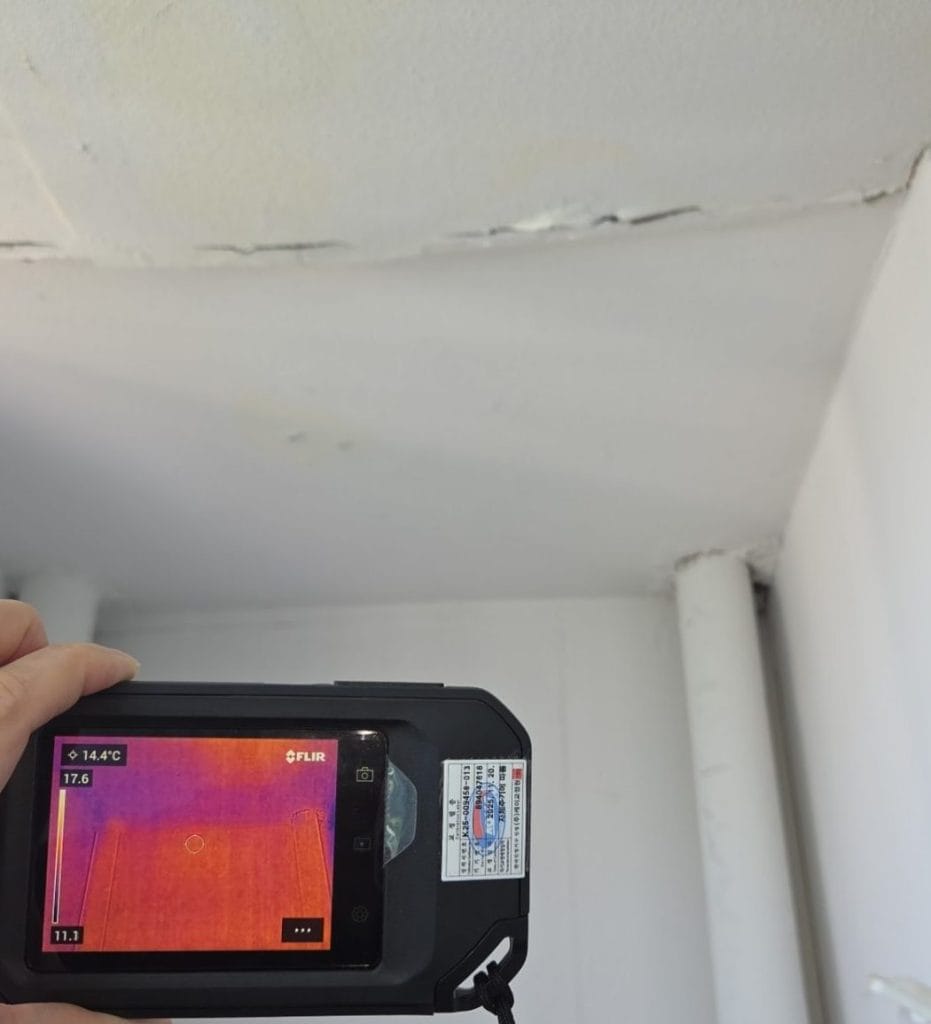
The size of a visible water stain alone is not enough to determine how much material needs to be removed. Water can travel behind ceilings, inside walls, and along pipes or structural components. However, a water leak does not necessarily mean that entire walls or ceilings need to be removed.
An experienced water damage restoration specialist can assess the extent of the damage and determine the appropriate scope of repairs without unnecessary demolition.
Q. The Water-Damaged Area Looks Dry Now. Can I Reapply Wallpaper Right Away?
Even if the surface appears dry, moisture may still remain within the underlying building materials. Moisture can remain in drywall behind wallpaper, ceiling cavities, insulation, wood, and flooring structures, even when there are no visible signs of dampness.
Before installing new wallpaper or other interior finishes, it is important to inspect the underlying materials and confirm that the affected areas have been thoroughly dried.
Q. Is Replacing the Wallpaper Enough If Mold Appears After a Water Leak?
If mold develops after a water leak, it is important to identify the source of moisture and inspect any wet materials before covering the affected area with new wallpaper. Mold can return if moisture remains trapped in walls or other building materials. The source of the leak should be addressed, the affected areas thoroughly dried, and any contaminated materials cleaned or replaced as necessary.
Q. Does All Water-Damaged Wood Flooring Need to Be Replaced?
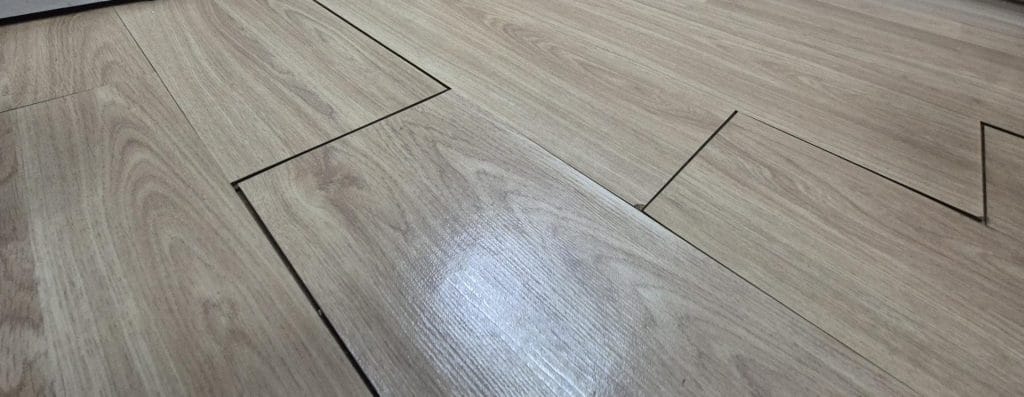
▲ Wood flooring showing signs of lifting and warping
Not necessarily. Whether water-damaged flooring needs to be replaced depends on the type of flooring, how long it was exposed to water, how far the moisture has spread, and whether the materials show signs of lifting, swelling, or warping. Even if only a few floorboards appear wet, moisture may have spread beneath the flooring. Conversely, if the affected materials can be properly dried, it may be possible to limit the scope of repairs. A thorough assessment of the flooring and underlying materials can help determine which sections can be retained and which need to be replaced.
Q. Does Water-Damaged Ceiling Drywall Always Need to Be Replaced?
Not always, but replacement may be necessary depending on the condition of the drywall. Drywall that has been exposed to moisture for an extended period, has become deformed, or has lost its structural integrity may need to be replaced. Replacement may also be necessary for absorbent materials that cannot be thoroughly dried. If mold has developed on porous materials, removal may be required depending on the extent of contamination and the condition of the materials.
Q. How Long Does It Take to Dry an Area After Water Damage?
There is no fixed drying time, such as three or five days, that applies to every water damage restoration project. The time required to dry water-damaged areas depends on several factors, including:
- The amount of water involved
- How long the leak continued
- The types of ceiling, wall, and flooring materials
- How deeply moisture has penetrated the materials
- Indoor temperature and humidity levels
- Ventilation conditions
- Whether professional drying and dehumidification equipment is used
Restoration and finishing work should begin only after confirming that the affected materials have been thoroughly dried.
Q. Is It Safe to Use Electrical Outlets or Equipment After Water Damage?
If water has entered electrical installations, outlets, or electronic devices, do not turn them on or use them immediately. In areas affected by both water and electricity, electrical safety must be addressed before water damage restoration work begins. If wiring inside ceilings, electrical outlets, distribution panels, or household appliances have been exposed to water, they should be inspected by a qualified professional before being used again.
Q. How Is the Cost of Apartment Water Damage Restoration Determined?
The cost of apartment water damage restoration depends on several factors, including the extent of the damage and the work required. The main factors affecting restoration costs include:
- The cause and location of the water leak
- The areas affected by water damage
- The extent to which ceilings, walls, and floors need to be opened up
- The scope of drying and dehumidification work
- The materials that need to be removed
- The materials that can be retained
- The extent of flooring, wallpaper, and ceiling repairs or replacement
- Whether furniture and household items require restoration
The cost estimate depends on the scope of work included in each stage, from leak detection and demolition to drying, restoration, and finishing work.
Q. What Should I Do If Additional Costs Keep Coming Up During Water Damage Restoration?
If additional work is required, make sure you understand the reason, the additional costs, and any changes to the project timeline before the work begins. During water damage restoration, removing sections of walls or ceilings may reveal hidden damage that was not visible during the initial inspection. Before signing a contract or approving a cost estimate, it is advisable to clarify the following:
- The initial scope of restoration work
- Items excluded from the original cost estimate
- How decisions will be made if additional work is required
- Who is responsible for approving additional costs
- Conditions that may affect the project timeline
Q. How Long Does Apartment Water Damage Restoration Usually Take?
The duration varies depending on the site, as the source of the leak must be addressed and the affected areas thoroughly dried before finishing work can begin. Minor repairs to interior finishes may take less time than projects requiring the removal of ceiling, wall, or flooring materials, followed by drying and reconstruction.
A typical water damage restoration project follows these stages:
Leak Assessment → Stop Water Intrusion → Demolition & Inspection → Drying & Dehumidification → Material Assessment → Structural and Interior Restoration → Finishing Work → Final Inspection
A reliable water damage restoration company should be able to explain the timeline for each stage and provide an estimated completion date.
Q. What Should I Look for When Choosing a Water Damage Restoration Company?
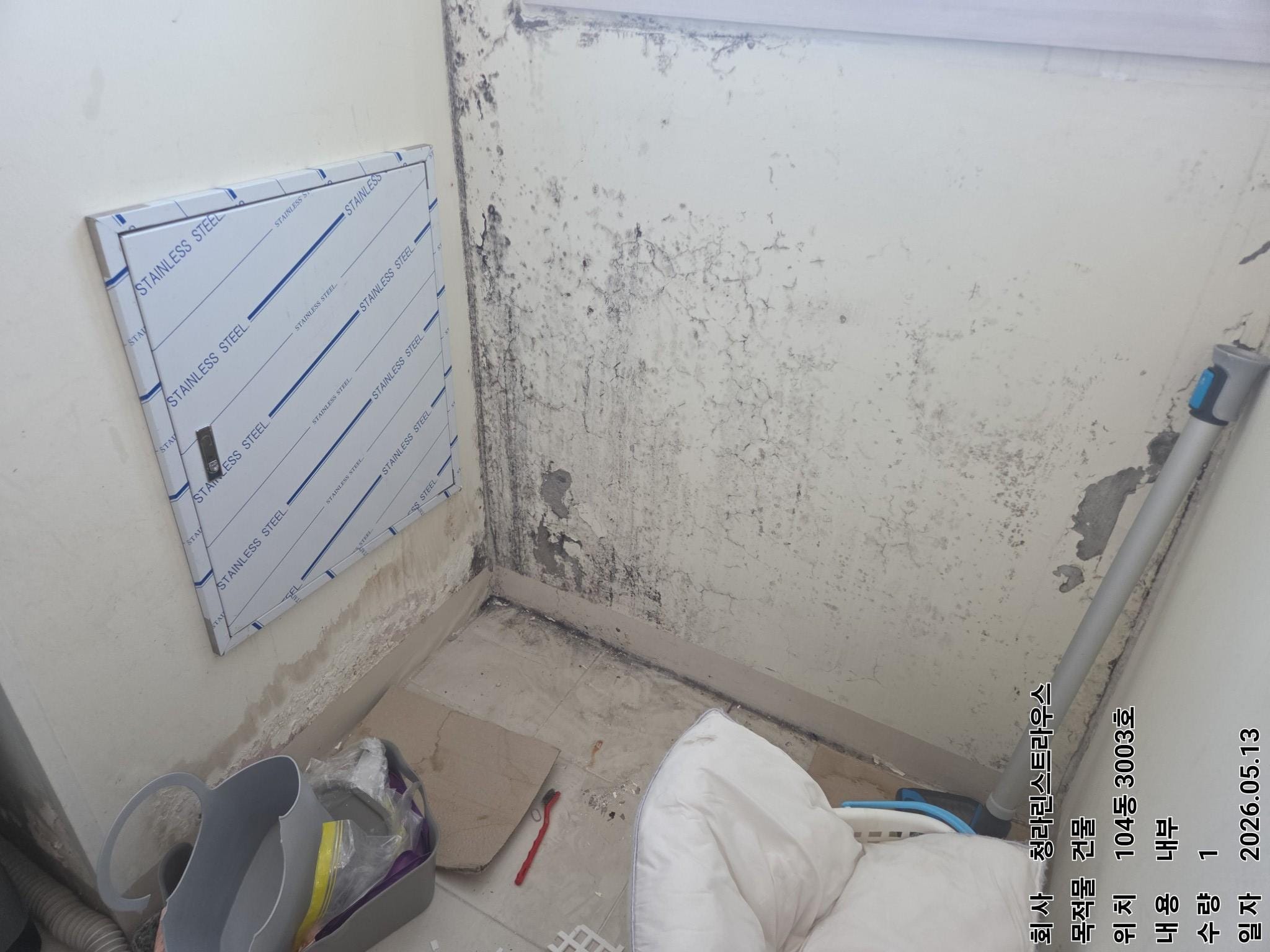
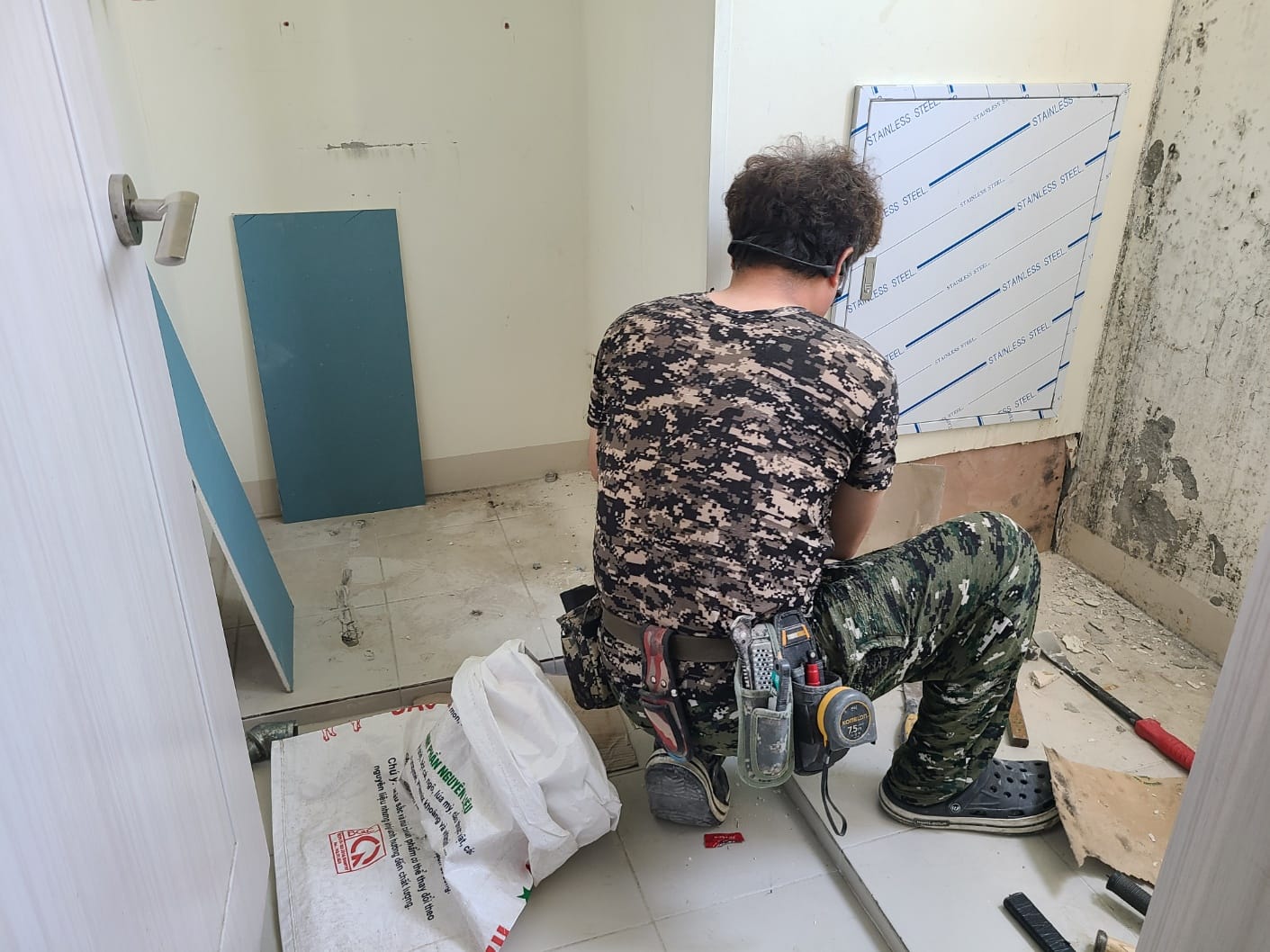
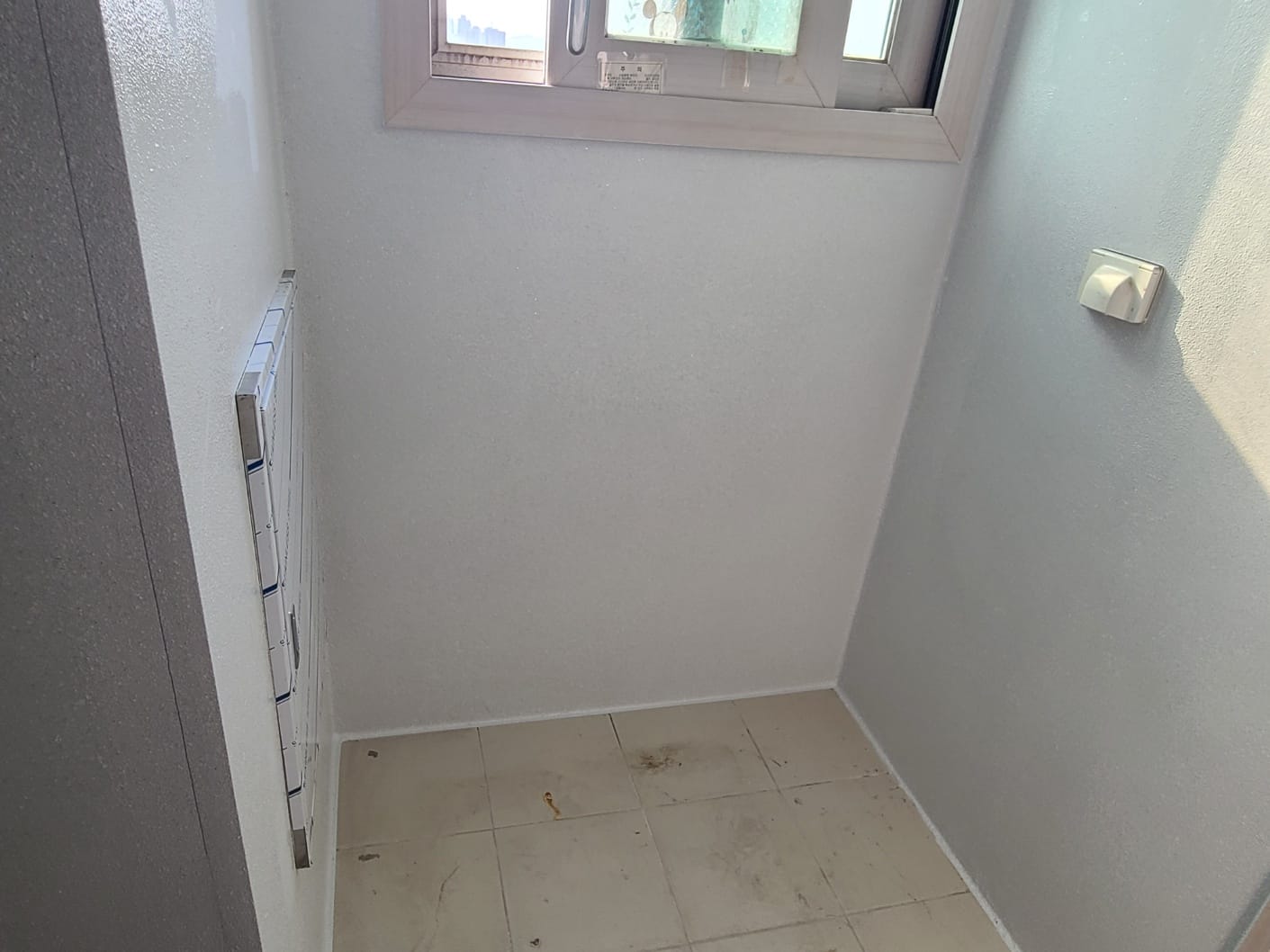
Look beyond the price and find out who will be responsible for managing the entire restoration process, from identifying the source of the leak to completing the final repairs.
Before hiring an apartment water damage restoration contractor, consider the following:
- Can the company clearly explain the cause of the leak and the required scope of restoration work?
- Can they explain why demolition or material removal is necessary?
- Do they explain the drying process and how they determine when drying is complete?
- Do they provide an itemized cost estimate?
- Will they discuss and obtain approval for additional work before proceeding?
- Can they provide an estimated project timeline?
- Is there a clearly designated contact person and contact information for any questions or concerns after the restoration work is completed?
Rather than looking only at photos of completed interiors, it is advisable to choose a company that can demonstrate its actual demolition, drying, and restoration processes.
Q. Does BELFOR Korea Provide Water Damage Restoration Services for Individual Apartments?
Yes. BELFOR Korea provides professional water damage restoration services for individual apartments and multi-unit residential buildings affected by water leaks or flooding, helping residents return to their normal lives. The goal of water damage restoration is not simply to remove or cover up visible water stains, but to restore a safe, comfortable living environment where residents can feel at ease again.
Not sure what to do after discovering a water leak? Contact BELFOR Korea for professional assistance.