How Are Battery Fires Different from General Fires?
Lithium-ion battery fires are similar to other industrial fires in many respects. The key differences are the potential for additional contaminants, the risk of re-ignition, and the need to safely manage affected batteries. Unlike a general fire, restoration work following a battery fire cannot necessarily begin as soon as the flames have been extinguished. The battery system must first be made safe, followed by an assessment of the contamination extent and equipment condition before the appropriate restoration approach can be determined.
Lithium-ion batteries are now widely used across industrial applications, including forklifts, automated guided vehicles (AGVs), production equipment, energy storage systems (ESS), and electric vehicles. As their use expands, it is increasingly important not only to establish safe facilities and systems, but also to plan in advance for how facilities and equipment can be restored following an incident.
Key Points
1. Contaminants Generated by Battery Fires
In addition to smoke, soot, and acidic residues commonly associated with fires, lithium-ion battery fires may generate contaminants such as fluorides and metal oxides. These substances can affect sensitive assets including machinery, production equipment, and electrical and electronic systems. Identifying the extent of contamination is therefore particularly important.
2. Safety Management After the Flames Are Extinguished
Lithium-ion batteries exposed to fire may remain unstable even after the fire has been extinguished. Before full restoration work begins, affected batteries need to be safely isolated and managed.
3. Storage, Transportation, and Disposal of Damaged Batteries
Batteries that have been exposed to fire or otherwise damaged should be stored, transported, and handled according to appropriate safety procedures. If a large-scale battery system has been affected, the restoration plan should also consider temporary battery storage and transportation, as well as options for recycling or disposal.
Q. Are Lithium-Ion Battery Fires Different from General Fires?
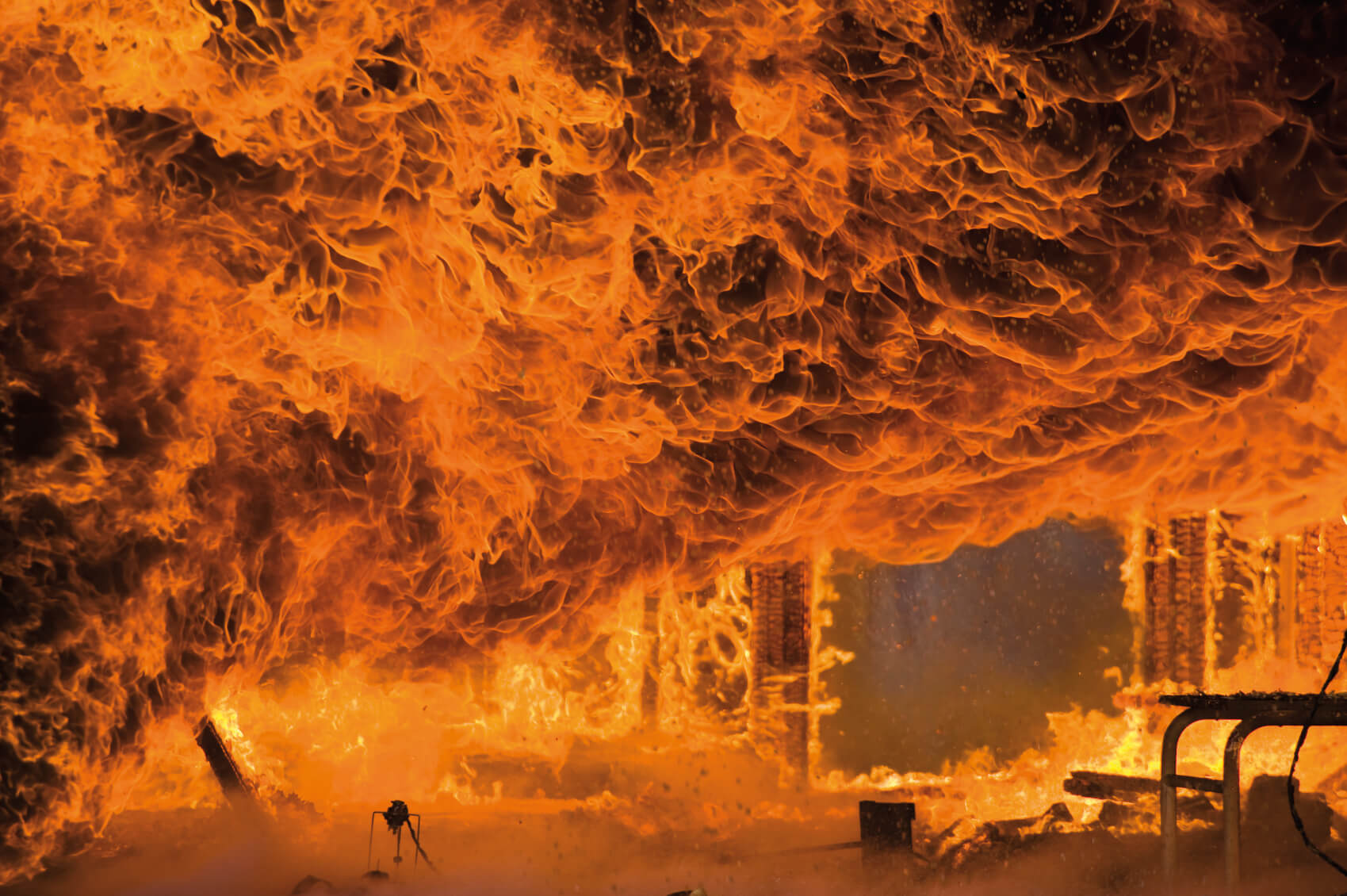
Battery fires are similar to general fires. Both can produce smoke and soot and expose buildings and equipment to heat and contaminants. The difference is that when batteries are involved, additional contaminants and battery-specific safety issues also need to be considered. Damaged batteries may remain at the site, while substances released from the batteries may be deposited on surrounding equipment and surfaces. Battery fire restoration therefore requires a comprehensive assessment of the battery condition, extent of contamination, and condition of affected equipment.
Q. Why Are Lithium-Ion Battery Fires a Growing Concern?
Lithium-ion batteries have a high energy density. If thermal runaway occurs—a chain reaction of heat-generating processes within a battery—a large amount of heat can be released within a short period of time. A battery that has experienced thermal runaway may require continued monitoring even after the fire has been extinguished. The disappearance of visible flames does not necessarily mean that the battery is internally stable. If a battery is suspected to have caused the fire or has been affected by the fire, additional factors need to be assessed as part of the restoration process.
Q. What Contaminants Can Be Generated by a Lithium-Ion Battery Fire?
Industrial fires can generate a range of fire residues in addition to smoke and soot, including acidic residues and corrosive by-products. When lithium-ion batteries are exposed to fire, additional substances may also be generated, including:
- Hydrogen fluoride (HF)
- Fluorides
- Metal oxides containing lithium, cobalt, manganese, nickel, and other metals
- Other battery decomposition products
These substances can spread through the air and be deposited on surrounding facilities and equipment. Contamination may also spread across multiple areas through ventilation and HVAC systems. In industrial facilities containing machinery, production equipment, and sensitive electronic systems, the assessment should therefore consider not only visible soot but also potential contamination from other fire and battery-related residues.
Q. Is It Enough to Check Only for Visible Soot?
No.
Following a battery fire, it is important to determine what contaminants may be present and how far they may have spread. The extent of contamination can vary depending on the size of the fire, ventilation conditions, the type and quantity of batteries involved, and the layout of the facility.
The assessment should consider:
- Whether the area can be safely accessed by personnel
- Whether contamination remains on machinery and production equipment
- Whether there is a risk of corrosion
- Whether electrical and electronic equipment may have been affected
- Whether the facility is in a condition to be returned to use
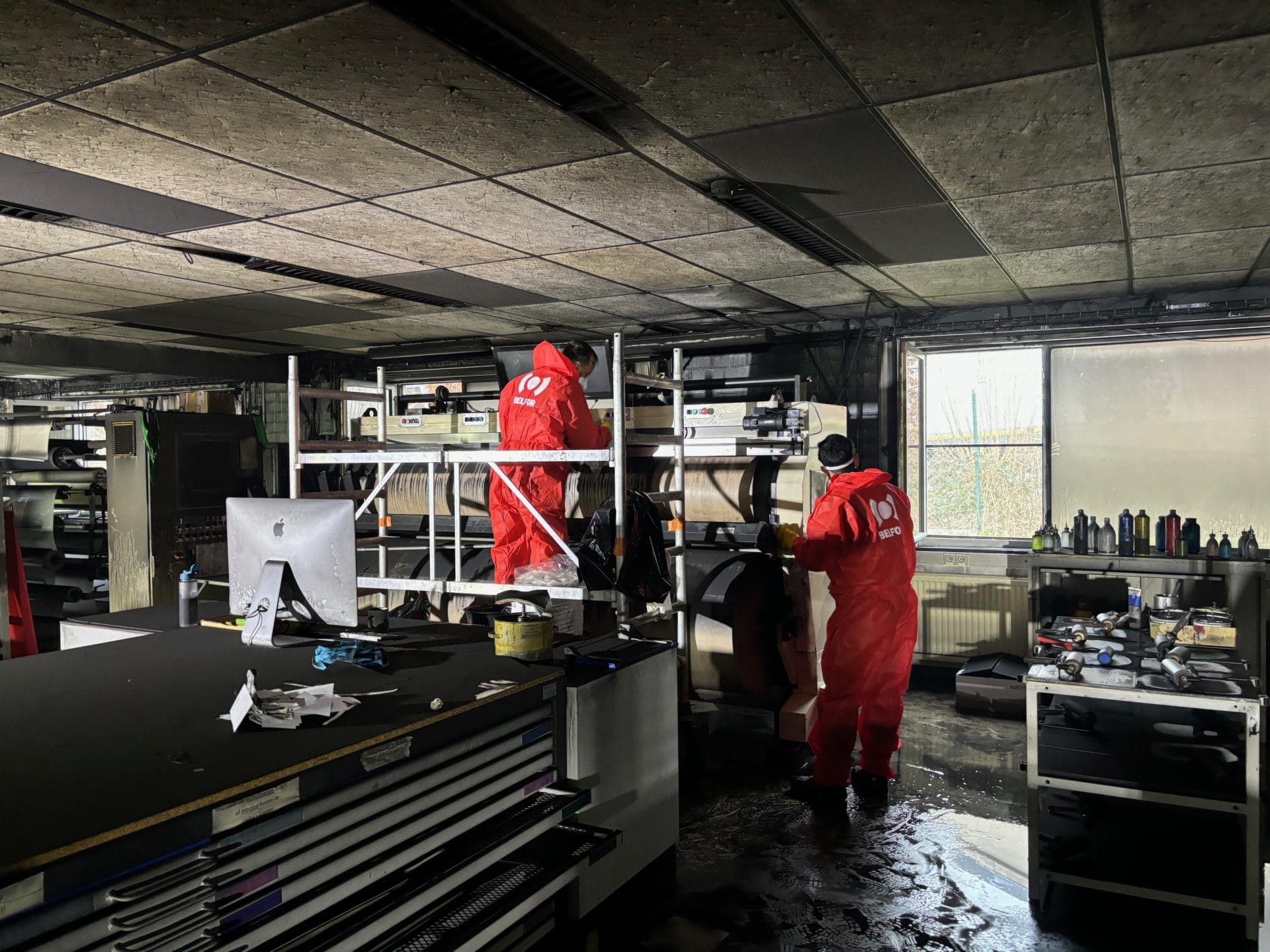
Where necessary, detailed analysis can be considered to identify contaminants remaining on surfaces. BELFOR’s wipe sample analysis involves collecting samples from equipment surfaces to assess residual contamination. A detailed contamination assessment helps establish the actual affected area and determine what restoration work is required before equipment or spaces can be returned to use.
Q. Do Batteries Still Need to Be Managed After the Fire Has Been Extinguished?
Yes.
Lithium-ion batteries that have been exposed to fire or otherwise damaged should continue to be handled with care after extinguishment. Their internal condition can be difficult to determine from appearance alone, and in some circumstances a risk of re-ignition may remain. Battery safety should therefore be established before full restoration work begins. The isolation, storage, transportation, and disposal of damaged batteries should be carried out in accordance with applicable safety procedures.
Q. What Is the Restoration Process After a Battery Fire?
The fundamental restoration objectives and process are similar to those for other industrial fires.
- Make the site safe.
- Assess the type and extent of contamination.
- Assess the condition of machinery and equipment.
- Determine which assets can be restored and which need to be replaced.
- Return operations to normal as safely and quickly as possible.
Depending on equipment condition and the level of contamination, different cleaning methods may be applied, including dry cleaning and aqueous cleaning processes. With battery fires, however, more attention may be required during the initial assessment to identify the contaminants present and determine the extent of contamination before selecting a cleaning method. Even equipment located within the same area may have been exposed to different levels of heat, smoke, and contaminants.
Q. Can Production Equipment and Electrical or Electronic Equipment Be Restored After a Battery Fire?
A fire does not necessarily mean that all affected equipment must immediately be discarded or replaced. The restoration potential of machinery, production equipment, and electrical and electronic systems can be assessed based on factors such as heat exposure, contamination levels, and corrosion risk. In industrial facilities, replacing equipment can require significant time and investment. It is therefore important to assess equipment condition early and distinguish between assets that may be restored and those that require replacement. The sooner this assessment can be made, the sooner an appropriate recovery plan can be developed to support the resumption of business operations.
Q. How Can a Facility and Its Equipment Be Returned to Operation After a Battery Fire?
Restoring a facility after a battery fire requires more than soot removal or general fire cleaning. Professional restoration expertise is needed to help return the site, facilities, and equipment to a condition where they can be safely used again. The process begins with safely managing affected batteries, assessing the extent of contamination and the condition of equipment, and then determining the appropriate restoration methods for the specific site. BELFOR Korea restores industrial facilities affected by fire, including not only buildings but also machinery, production equipment, and electrical and electronic equipment, with the objective of helping affected operations return to their pre-loss condition.
Want to See How BELFOR Korea Approaches Battery Fire Restoration?
References
- Federal Department of the Environment, Transport, Energy and Communications (DETEC), Switzerland. Risk minimisation of electric vehicle fires in underground traffic infrastructures, 2020.
- Federal Department of the Environment, Transport, Energy and Communications (DETEC), Switzerland. Electric mobility and road tunnel safety: hazards of electric vehicle fires, 2018.
- Willstrand et al., RISE Research Institutes of Sweden. Toxic Gases from Fire in Electric Vehicles, 2020.