Asia’s Earthquake Risk: What Industrial Facility Managers Should Do Before and After Major Seismic Activity
A region under constant seismic pressure
Asia sits on some of the most seismically active ground on Earth. On average, the region experiences roughly 60 earthquakes of magnitude 6 or higher every year, and around 8 of magnitude 7 or higher. Recent months have underscored this baseline risk, with multiple earthquakes above magnitude 6 striking across the region and triggering evacuations, infrastructure damage, and in some cases localized tsunami warnings.
For industrial facility managers operating plants, warehouses, and distribution centers across Asia’s earthquake-prone markets, this is not an isolated contingency. It is a recurring operational risk that demands a clear, rehearsed response plan, and a recovery partner ready to move the moment it is safe to do so.
Why industrial facilities face a different kind of risk
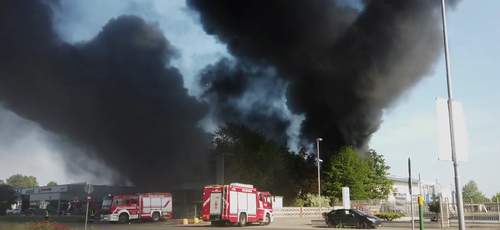
Homes and industrial facilities do not fail the same way in an earthquake, and they do not recover the same way either. Facility managers are dealing with unanchored machinery and racking that can topple or drop loads, utility interruptions that can halt production or spoil sensitive inventory, elevated fire and explosion risk from ruptured gas lines and electrical systems, and water intrusion that can follow structural damage for days after the shaking stops. A single facility going offline can also ripple through supplier and customer networks across the wider region.
Before an earthquake: what facilities should have in place
Preparation determines how smoothly a facility moves through the hours after an earthquake. Facilities that have the following in place respond faster and with far less confusion when an event actually occurs.
- Anchor heavy machinery and racking. Secure equipment, storage racks, server cabinets, and rooftop units so they cannot topple or shift during strong shaking.
- Install automatic utility shutoffs. Fit gas lines with automatic shutoff valves and use flexible connections on process piping to reduce rupture risk.
- Keep facility records accessible offsite. Maintain current as-built drawings, utility shutoff locations, and equipment manuals somewhere reachable even if the site itself is inaccessible.
- Document a chain of command and contact tree. Name decision-makers and backups, and test an emergency communication plan for employees, suppliers, and customers.
- Confirm insurance coverage. Review business interruption and equipment breakdown provisions before an event, not after.
- Pre-qualify a recovery partner. Establish the relationship and engagement process with a disaster recovery specialist in advance, so response begins the moment the site is safe.
First steps after an earthquake to protect your assets
Even with strong preparation, facility managers still face a critical window of decisions once employees are safe and accounted for, before a restoration and recovery specialist arrives on site. These early actions protect people, preserve evidence for insurance claims, and prevent minor damage from escalating into major loss.
- Confirm structural safety before re-entry. Do not allow anyone back into the building until a qualified person has visually checked for structural damage, gas odors, or downed electrical lines. If there is any doubt, wait for a professional assessment.
- Shut off utilities if not already done automatically. Isolate gas, electrical, and water supplies at the main shutoff points if leaks, sparking, or flooding are suspected.
- Check for fire and chemical hazards. Inspect chemical storage, flammable material handling zones, and process equipment for spills, ruptures, or ignition risks.
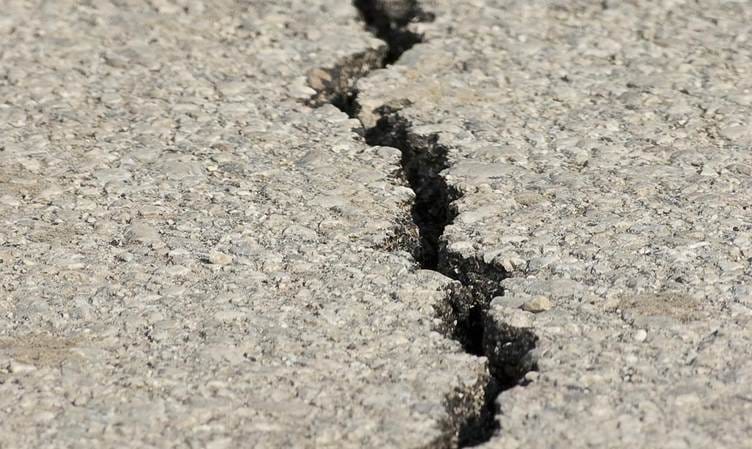
- Document everything before touching anything. Photograph and video all visible damage, including structural cracks, equipment displacement, and water intrusion, before any cleanup begins. This documentation is essential for insurance claims and for a recovery specialist to accurately scope the work.
- Mitigate ongoing damage where it is safe to do so. Covering roof breaches, containing standing water, and moving unaffected inventory away from compromised areas can prevent a manageable loss from getting worse, but only where it does not put personnel at risk.
- Notify your insurance provider promptly. Early notification starts the claims process and often determines which mitigation steps are reimbursable.
- Contact a disaster recovery specialist as soon as the site is safe. A specialist can then deploy trained teams for structural drying, debris removal, equipment restoration, and full-scale reconstruction, working from the documentation and initial assessment already gathered on site.
The bottom line
Earthquake risk across Asia is constant, not occasional. For industrial facility managers, the difference between a costly but manageable disruption and a prolonged shutdown often comes down to what happens in the first hours after the ground stops shaking, and how quickly the right recovery partner can step in.